
In brief
Choose bath features you can maintain using the exact manufacturer’s care instructions. Separate surface cleaning from internal jet-system care and professional service. A low-maintenance advertisement is less useful than a clear routine, permitted products and accessible support.
IN THIS GUIDE
Match care instructions to each surface and system
Kohler’s care page distinguishes bath surfaces, hardware and shower-package cleaning, with product restrictions for its finishes. American Standard’s linked manual separately describes circulation-system care for applicable configurations. Do not transfer one manufacturer’s cleaner or procedure to another bath.
Ask for the exact owner manual and all option-specific care sheets. Make an inventory of the bath surface, door seal, fittings, jets, drain system and any screen. Record which instruction covers each item. A surface-care webpage alone may leave the internal system question unanswered; request the missing documentation rather than inventing a flush routine.
Ask who can perform the actual tasks
Read the owner instructions with the reader’s routine in mind. Ask how cleaners are applied, how surfaces are reached and which checks the owner may perform. Discuss any difficult reaching or assistance needs appropriately. A feature that feels pleasant in a demonstration may create a care task the household does not want.
Keep owner care and professional repair distinct. Ask how service panels remain accessible and who handles a leak, damaged seal or equipment fault. Do not dismantle fittings or combine cleaning chemicals from separate suggestions. Choose permitted materials using the correct instructions and each product’s label.
Worked decision: more features, missing care evidence
Imagine one bath offer includes several jet systems, but the provider supplies only a glossy surface-cleaning leaflet. A simpler offer includes clear operating and care documents. The missing manual does not prove the first bath is difficult to maintain; it means its care requirement remains unconfirmed.
Request the current system instructions and compare the tasks alongside the reader’s preferences. Ask which optional features can be omitted if they add unwanted work. The choice can remain the richer package, but it should follow an understood routine rather than a promise that automated features eliminate all care.
Create a manual-backed care planner
Fill the rows below with an instruction reference, permitted materials and the responsible person or provider. Enter frequencies only where the model’s current documents state them. Keep a follow-up row for missing guidance. A calendar reminder should point to the actual instructions, not reduce a complex task to an unsupported shortcut.
Use an existing soft cloth or storage arrangement when permitted and useful. Buying a branded cleaning bundle is optional unless the instructions specifically require a particular product. Resolve the care routine before purchase so comfort extras remain a deliberate choice rather than an obligation discovered afterward.
- SurfaceExact material, permitted cleaner and instruction reference.
- Seal and fittingsOwner care, restrictions and fault-reporting route.
- SystemsModel-specific internal-care document and required schedule.
- AccessWho performs difficult tasks and how service panels remain usable.
Make an inventory of surfaces, systems and care documents
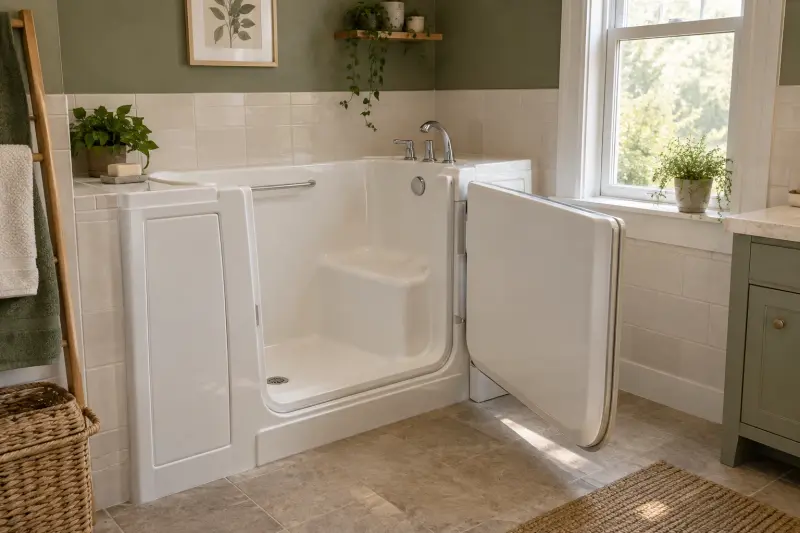
Write the exact bath configuration at the top of a care inventory. List the bath surface, hardware, door and seal, supplied controls, drain arrangement, any jet or air system, screen and wall finish. These are different items and may have different instructions. The inventory should identify which current document applies to each, rather than treat one glossy surface-cleaning leaflet as the entire maintenance plan for a feature-rich installation.
Kohler's US care page distinguishes its bath surfaces, hardware and shower-package items and lists restrictions for its finishes. American Standard's product-linked US manual separately discusses relevant circulation-system care. Those narrow manufacturer examples explain why care information belongs to the exact product and options. Do not transfer a cleaner or procedure from one bath to another merely because both are described as acrylic or walk-in.
Ask for missing option-specific instructions before choosing the package. A provider may need to supply another sheet or identify the relevant manual section. Mark the item unanswered until that response arrives. The gap does not prove the feature is difficult to maintain; it means the household has not yet established its commitment. An automated-care phrase is not evidence that no other owner task remains.
Separate ordinary owner care from professional service. Ask the provider to identify the permitted household tasks and the route for a leak, damaged component or equipment fault. Do not dismantle fittings or interpret a technical troubleshooting table as a reason to perform specialist work. The inventory should direct the right question to the right document or provider, with no need for a buying guide to rewrite the installation manual.
Add a responsible person or support arrangement only after the tasks are understood. The user might prefer to manage some routine care while another household member handles documents or a confirmed task. Keep personal reaching and assistance concerns for appropriate advice. A cleaning plan should reflect actual capacity and preference, not assume a family member will silently absorb every new obligation because an optional system looks appealing.
Choose permitted materials using the actual instructions
For each item, record the permitted material or product type from its applicable instructions and the relevant label information. Keep this row attached to the surface or system it serves. A product sold for bathrooms is not automatically approved for every finish or internal component. Ask the provider to clarify an ambiguous recommendation rather than choose a stronger cleaner in the hope that it will answer several different tasks at once.
Kohler's cited US page calls for nonabrasive surface care and excludes specified products, including bleach-containing cleaners, for its walk-in bath. Retain that as a product-specific instruction. It should not become a universal recipe applied to another manufacturer's system. Likewise, a named cleaner in another manual should be checked against the actual product and formulation supplied. The household needs current relevant guidance, not a merged list from unrelated webpages.
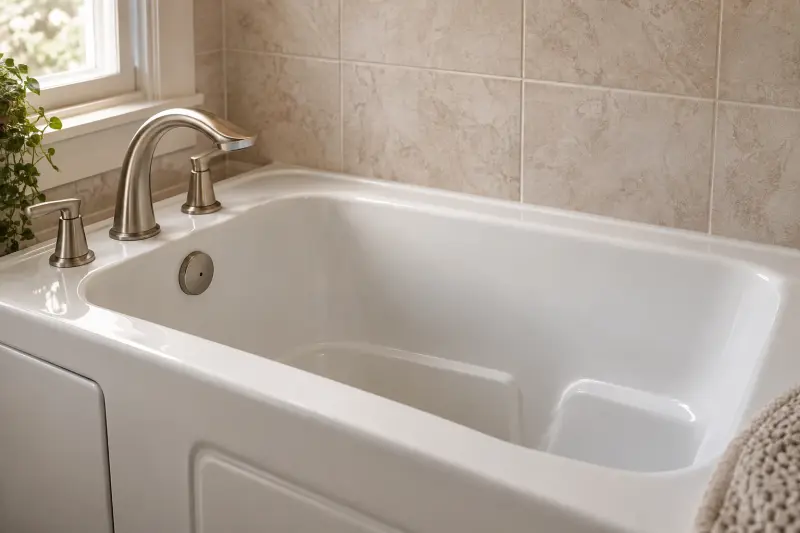
Keep product labels intact and avoid combining cleaning chemicals from separate suggestions. This guide supplies no home-mixed formula, dose or flushing sequence. Where the model requires a defined system-care routine, use its current instructions and obtain the provider's explanation. A calendar reminder should point to that complete source rather than reduce it to a vague shortcut such as add cleaner and run jets.
Ask whether existing materials already satisfy a confirmed task. A suitable soft cloth or storage location may be enough for part of the routine where the instructions permit it. A branded cleaning bundle can be a deliberate convenience choice, but do not imply it is compulsory unless the applicable instructions actually establish that requirement. The ethical companion recommendation explains compatibility and purpose, with an existing-item option clearly available.
Store care products through their label instructions and the household's relevant arrangements. Do not place an ordinary bottle where it interferes with the bath approach, controls or service access. If a storage change affects the reviewed layout, ask appropriate advice. The care-material row should lead to an understood routine and suitable private record. It is not a reason to fill the bathroom with accessories before the user knows who performs the tasks.
Map the care routine to actions and household responsibilities
Read each instruction with the household's actual routine in mind. What needs moving, reaching, applying, rinsing or recording, and who is expected to do it? Ask the provider to explain any unfamiliar step on the current configuration. Do not assume a low entry or wide seat automatically makes every cleaning action easy for the user. Product access and a person's task require their own discussion where relevant.
Keep frequencies sourced to the model's current documents. If a surface-care webpage omits a system schedule, request the relevant instructions instead of inventing a weekly or monthly rule. The American Standard manual provides a separate circulation-care section for applicable systems. That illustrates why the correct source matters; this guide does not publish its sequence as a universal procedure. Record the actual reference and confirmed responsibility in the planner.
Ask about automatic functions without assuming they replace manual care. Which task does the feature perform, what remains with the owner and what happens if the expected cycle is unclear? The provider should explain the exact variant and supplied manual. A name such as purge or cleaning system is not a complete ownership plan. Keep its documented function separate from other surfaces, seals and room finishes on the inventory.
Make assistance responsibilities explicit and realistic. A family helper may agree to a particular task, but should receive the relevant instructions and understand the scope. Do not assign technical service to an unqualified helper or use willingness as proof that a difficult movement is suitable. An appropriate discussion may reveal a different option, a simpler configuration or a need for further task advice before purchase.
Use a calendar only after the routine is defined. Each reminder can point to the item, complete instructions and responsible person or provider. Add a pending-guidance entry where information is missing. The planner's value is clarity, not the number of reminders it creates. An existing household calendar and folder can support the arrangement without a new subscription, elaborate cleaning app or speculative purchase.
- Item and taskSurface or system, action description, and applicable configuration.
- InstructionComplete current source and relevant section.
- ScheduleEnter only a documented or provider-confirmed interval.
- ResponsibilityHousehold task, agreed assistance, or professional service.
- Open guidanceMissing instruction or explanation, with next contact.
Worked choice: extra systems with only a surface leaflet
Imagine two fictional bath offers. One includes several comfort systems but supplies only a surface-cleaning leaflet during the first conversation. Another is simpler and provides clearer operating and care documents. The household initially assumes the richer bath is harder to maintain. The worked choice corrects that inference: missing evidence does not establish difficulty. It establishes a specific information request before comparing ownership commitments.
The household lists the richer offer's actual options and asks for the current system instructions. It records each task, applicable document and responsible person. An automated feature is explained as performing a particular function, while other owner care remains. The household does not claim a typical time saving or publish an invented amount of work. Its record reflects the documents and the reader's own routine questions.
The simpler offer receives the same review. Fewer optional systems do not remove all surface, door, fitting or drain questions. The household asks about the included configuration and ordinary service route. Both offers are compared through concrete tasks rather than a feature count or the number of pages in the manual. A clearer leaflet is useful information, but not independent proof that a product is more reliable or hygienic.
Next, the reader identifies which additional sensation or feature they genuinely value. If an option adds an unwanted care responsibility, the provider is asked about a configuration without it where offered. A preferred option can remain a deliberate choice after its commitment is understood. The guide supplies no therapeutic ranking and does not imply that choosing a simpler bath is inferior or that a premium bundle answers every person's needs.
The final decision includes who can perform the ordinary tasks and where professional help is obtained. If a personal reach question remains, it is directed to appropriate advice. Existing permitted cloths and storage are considered before a cleaning bundle. The useful outcome is an understood care routine tied to a chosen preference. The purchase follows that evidence, rather than a low-maintenance slogan or a fear-based claim about untested systems.

Keep fault reports and service access outside ordinary cleaning
Ask which situations should be reported through the provider's support route rather than addressed by changing the cleaning routine. The household should know where to find that route and the applicable instructions. A question about a seal, unexpected operation or a possible leak needs the appropriate response for the installed system. This article does not diagnose causes or supply repair instructions, and a stronger cleaner is not a substitute for a defined service process.
Keep professional access visible in the room plan. Ask which panels or areas the provider needs available and how the finishing trade maintains the accepted arrangement. Do not cover an access question with a decorative organizer or assume a continuous wall finish establishes complete installation. Ordinary storage can be reconsidered separately after the required boundaries are explained. A clear access record supports ownership without asking the user to remove panels.
Record a report in ordinary terms: observed question, date, relevant configuration and contact response. Include only information that can be obtained appropriately from normal positions and supplied records. Keep identifiers private. A photograph may help where the provider requests it, but should not be presented as a technical inspection or evidence that our website has tested the bath. Retain the professional response and any confirmed next action.
After a relevant service or option change, ask whether the care instructions need updating. Keep the applicable new document and archive earlier guidance clearly where it explains the history. Avoid combining an older routine with a replacement component whose instructions differ. The household index should identify which source applies now and where unresolved guidance is being requested.
Before buying another care product, return to the task. Is compatibility confirmed? Does the household need it, or does an existing permitted item serve the same purpose? A lower-cost cloth or storage purchase can be useful for a defined need, while unnecessary bundles can add clutter and cost. The care plan should support the reader's chosen routine honestly, with no fabricated cleaning results, urgency or promise that accessories improve safety or treatment outcomes.
Questions readers ask about walk-in bath cleaning
Can I use my usual bathroom cleaner?
Check the exact bath and component instructions and the product label. A cleaner suitable for one surface is not automatically suitable for every finish or internal system. Kohler's cited US care page has product-specific restrictions. Do not transfer that advice wholesale to another brand or combine unrelated suggestions into a home-made cleaning formula.
Do automatic cleaning features remove all care?
Ask which task the exact feature performs and which responsibilities remain. Obtain the option-specific instructions rather than rely on its name. Surface, hardware, door and internal-system care can be different rows. The household should understand the actual routine before choosing the package, without assuming automation means no upkeep or that extra systems are necessarily difficult.

How often should I clean the jets?
Use the current instructions for the actual system and ask the provider to explain any missing schedule. This guide supplies no universal flushing frequency or sequence. A surface-care leaflet may not address internal circulation. Mark the gap and request the applicable document before entering reminders or buying a cleaner for an unconfirmed task.
Can a helper do the routine?
Agree the specific household tasks, instructions and access arrangement, with appropriate personal-task advice where needed. Keep professional service separate from ordinary care. A helper's willingness does not authorize dismantling or establish suitability of a difficult movement. The care planner should reflect a realistic agreed responsibility rather than assume another person handles every extra feature.
Is a branded cleaning bundle necessary?
Ask what the applicable instructions actually require and compare compatibility with existing permitted materials. A bundle may be a convenience choice, but it cannot replace missing guidance. Keep the no-purchase option visible where a suitable existing cloth or item already serves the task. Do not buy a stronger product to resolve a service question or undocumented routine.
What should I do when an operation or leak concern appears?
Follow the relevant current instructions and contact the appropriate provider route, describing the observation without diagnosing it yourself. Keep the report and response privately. Do not open service equipment or alter the system using a generic internet procedure. A clear support record and accessible complete manual are more useful than an invented troubleshooting shortcut.
MAKE THE SPEND MEANINGFUL
Before adding to the basket.
- Reuse permitted cloths and an existing private calendar.
- Consider a simpler feature package if its care better fits the household routine.
How this guide was prepared
AI-assisted editorial research, checked against the linked primary sources. Product testing and a credentialed individual review are not claimed.
source-checked editorial; no hands-on testing or expert suitability assessment claimed
How we use sources and AI assistance ↗Sources & fact checks
The guide separates sourced facts from editorial questions and examples. We have not claimed hands-on product testing. How we use sources and AI assistance.
- Kohler: cleaning and care guidance ↗
- American Standard: walk-in bath installation and owner instructions ↗
Found an error or an outdated detail? Contact the editorial team.