
In brief
Request fill and drain evidence for the proposed bath and its stated plumbing conditions. An edited demonstration or fast-drain label is not a guarantee about your home. Include the waiting period in the reader’s complete bathing routine before deciding.
IN THIS GUIDE
Ask what the timing actually measures
Kohler states that fill and drain times vary with the home’s pipe capacity and flow. Treat any demonstration as conditional evidence rather than a universal duration. Ask whether the timing includes the actual operating water level, the installed drain system and the sequence used to release the door.
Separate filling from draining, and distinguish a complete sequence from a short video segment. Record the model, options and conditions alongside any stated time. If the supplier cannot provide that context, mark the timing as unconfirmed rather than inserting a plausible number from another product.
Discuss comfort and access during the wait
Describe how the reader expects to sit, use the handshower or reach needed items while the sequence takes place. Ask the provider to explain which actions are possible on the exact bath. Keep personal concerns about sitting, temperature tolerance or assistance for appropriate advice rather than relying on comfort marketing.
Ask how the door is used according to the manual and what support route applies if the expected sequence does not complete. Do not experiment with releasing a filled bath door or changing drain components. A convenient feature should be understood through the installed system’s instructions and supervised explanation.
Worked decision: a video with missing conditions
Imagine a promotional clip shows rapid emptying, but does not identify the water level or plumbing arrangement. The reader values a short bathing routine and assumes the video proves the home will perform the same way. Add the missing conditions to the evidence request before accepting that conclusion.
Ask the installing provider what can be confirmed from the site assessment and what remains variable. Compare an appropriately assessed shower routine if waiting is a major concern. A bath may still suit the reader’s preference, but the decision should reflect the complete sequence, not a single attractive demonstration.
Make a timing evidence sheet
Use the matrix below for each provider. Store its written answer with the bath specification and survey. Keep a clear distinction between measured demonstration, provider estimate and site-confirmed information. Do not combine those evidence levels into a fabricated average.
Before ordering, ask for an explanation of normal operation and the process for reporting unexpectedly slow performance. If essential timing information remains missing, gather more evidence. Rearranging nearby towels or toiletries can support comfort separately, but it does not change an unresolved drain specification or prove personal suitability.
- ConfigurationModel, drain option and operating level used.
- ConditionsSupply and drainage context behind the stated timing.
- RoutineWhat the reader does during fill, bathing and drain.
- EvidenceDemonstration, estimate or installed-system confirmation.
Define the beginning and end of a timing claim
Ask what a supplied fill or drain time actually measures. Write the start event, end event, model, configuration and relevant conditions beside the figure. Filling to an operating level is not the same description as a short tap demonstration. Draining the water and completing the normal exit sequence are related but distinct stages. A useful answer explains the counted activity rather than relying on the words fast or quick to establish a household duration.
Separate fill evidence from drain evidence. They may depend on different parts of the installed arrangement, and a demonstration of one does not answer the other. Ask the provider to describe water level, supplied drain system and the plumbing conditions used. Keep any ordered option visible. If a figure comes from another variant, request an explanation of relevance before treating it as evidence for the proposed bath.
Kohler's US fast-drain page includes a qualification that actual fill and drain times vary. Its FAQ links variation to home plumbing conditions. Retain that context beside any manufacturer demonstration. This is not a prediction of a slow installation, nor evidence that every advertised time is misleading. It is a reason to obtain the scope and conditions of the particular claim and distinguish it from a guaranteed result in the reader's home.
Describe what the household needs to understand about waiting. One reader may value a long soak, while another prioritizes a shorter complete routine. Neither preference gives this website an appropriate universal threshold for acceptable minutes. Ask the user to state their concern in ordinary words and direct personal tolerance or assistance questions to relevant advice. The supplier should explain the feature; the reader's task needs its own consideration.
Finish the timing brief with evidence status. A documented demonstration, provider estimate and site-specific response should retain their names. Do not average them into an invented typical time. If an essential condition is missing, mark it unanswered and request it. This makes the next conversation more precise and helps the household decide whether to gather further evidence, compare another appropriately reviewed routine or continue with the chosen bath proposal.
Read a demonstration as evidence with conditions
When a provider shows a video, ask whether it presents the complete relevant sequence at its normal speed. Identify any cuts, captions or transitions that limit what can be inferred. The purpose is not to accuse a demonstration of wrongdoing; a short product video may simply explain a feature rather than document a timed test. Record what the material actually establishes and ask for the missing context instead of assuming every visible segment represents the whole routine.
Ask which bath and options are shown. A drain arrangement described for one model may not be the one in the quote. The exact identity matters more than an attractive caption. Keep the video link or provider description privately with the current specification so the household can revisit the explanation. Do not label that viewing our hands-on test or suggest a generated illustrative image documents actual draining performance.
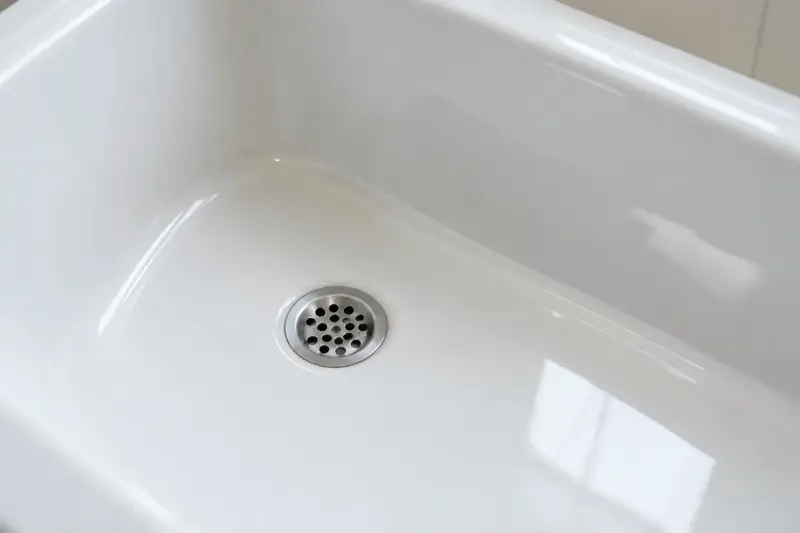
Editorial illustration Request the water level and plumbing conditions used for any timed demonstration. If the provider does not know, mark the relevant fields unanswered. A visually small remaining amount or an unstated starting level can make a clip difficult to compare with another. Do not fill the gaps by calculating from product capacity unless the qualified provider supplies a relevant basis. A plausible calculation is not a measurement of the installed bath.
Ask what the site review can confirm and what remains variable. American Standard's cited US manual places responsibility on the installer to check plumbing suitability for its Quick Drain arrangement. That narrow model-document example explains why an advertised feature still needs an installed-system review. It supplies no household testing procedure and no permission to modify a drain. Your provider should identify the corresponding process for the selected bath.
Keep the response in writing where timing matters to the purchase. A statement might confirm the specified arrangement without guaranteeing an exact household duration; record it accurately. If a commitment is offered, retain its actual terms rather than paraphrasing it into a stronger promise. The comparison should preserve both the useful evidence and its limits so the reader can make an informed decision without invented performance certainty.
Plan comfort and assistance through the complete sequence
Describe the user's intended seated routine during filling and draining. Ask which supplied controls or features can be used at each stage and where the relevant items are kept. A provider should explain the exact configuration through its current instructions. This article does not prescribe a posture or declare a feature appropriate for personal health. The practical question is whether the reader understands the complete activity they would be choosing.
Keep comfort preferences separate from evidence about timing. A heated feature or handshower may have a documented role, but it does not establish a shorter drain duration or guarantee comfort for everyone. Ask the user what matters and direct personal temperature tolerance or prolonged-sitting concerns to appropriate advice. A general relaxing description should not be converted into a claim about treating a condition or solving every concern about waiting.
Include any usual assistance. Does a helper prepare towels, operate an agreed control or support another part of the assessed routine? Record the proposed tasks and locations for discussion. Do not assume that help can compensate for an unresolved entrance, exit or waiting concern. The provider explains its physical arrangement and the relevant assessment addresses personal actions. Keeping those responsibilities separate avoids treating a family promise as proof of suitability.
Ask about the normal door sequence and the appropriate support route if the expected sequence does not complete. Have that explanation tied to the current model manual at handover. Do not experiment with releasing a filled door or alter drain components to see whether waiting can be reduced. Our guide supplies buying questions; specialist procedures and appropriate assistance belong to the installed equipment's documented provider route.
Consider smaller storage tasks only after the main routine is understood. Using an existing suitable towel location or reorganizing toiletries may support comfort without another purchase. An organizer is relevant when it answers a confirmed reach or preparation task in the reviewed layout. It does not change unresolved drain performance or establish personal suitability. The ethical companion choice should make its narrow purpose clear and keep the no-purchase option visible.
Worked evidence review: the impressive clip with an unknown starting level
Imagine a fictional reader who wants a shorter bathing routine and sees a promotional clip showing rapid emptying. The clip does not identify the starting water level, exact variant or plumbing arrangement. The household initially assumes it proves the proposed home installation will perform identically. The worked review begins by listing the missing conditions rather than assigning a fictional number to the bath or declaring the demonstration invalid.
The household asks the provider what the clip represents. It learns which configuration is shown and whether the segment covers complete draining or illustrates a feature. Where the starting level remains unknown, that field stays unanswered. The household does not average the clip with another manufacturer's estimate. Different activities and conditions are not comparable merely because both materials contain a timer or use the word fast.
Next, the installing provider is asked to explain the site's relevant review and any timing information it can supply for the chosen configuration. The household keeps confirmed physical arrangements separate from estimated duration. If a statement remains conditional, the condition stays beside it. The provider's response may improve the evidence while still leaving an exact household timing unresolved; that is a useful limit to understand before purchase.
The reader returns to the full routine card. Waiting is a significant concern, so an appropriately assessed shower arrangement is also discussed. The bath's soaking preference remains visible, but an optional comfort feature does not automatically settle the concern. The comparison includes approach, washing, assistance and exit for both proposals. It avoids claiming that the other category is universally faster or easier for the person.
The result may be more evidence, a different proposal or an informed choice to accept the bath's explained sequence. If the reader proceeds, the model, conditions and normal-use questions join the handover file. No actual purchase, customer result or test is claimed by this fictional example. Its value is a method for turning an attractive clip into a precise conversation and preserving the reader's right to pause when the decisive information remains missing.
Use a timing evidence sheet and a clear post-installation question route
Make a timing sheet for each considered bath with model, drain configuration, fill definition, drain definition, conditions, evidence type and unanswered questions. Attach the provider's response and document date. The sheet should be short enough to compare without stripping away important scope. Use source-specific information rather than copying a time from another site's summary or a different product's page.
Add a column for the reader's practical concern. It might say wants to understand total seated sequence or needs to discuss assistance during waiting. This keeps the evidence connected to a real task instead of rewarding the smallest isolated duration. Do not enter a medical conclusion or a universal acceptable time. The user and relevant advice determine the concern; the supplier identifies its model's functions and documented performance information.
Before ordering, ask how normal operation will be explained and who receives questions about unexpectedly different performance. Identify whether the bath provider, installer or another professional handles the first report. Keep private account and equipment details in the household record. A clear support route is part of ownership, but do not turn a contact number into a guaranteed response or promise that every reported concern has the same cause.
If a post-installation question arises, record the observed issue in ordinary words and contact the appropriate provider route under the current instructions. Do not diagnose it by opening panels, changing pipework or applying an online procedure. The household can retain the date, question and professional response as part of the service history. That record helps explain what changed without claiming the reader or our editorial team has tested the installation.
Update the timing sheet when the model or proposed configuration changes. An earlier demonstration may no longer describe the selected bath. Keep the current evidence with the accepted order and archive superseded planning information privately. A plain folder is sufficient for this process. The useful value is a transparent decision and support record, not an elaborate timer accessory or a promise that a feature label guarantees the household's future routine.
- IdentityExact model, drain system, ordered options, and document date.
- Timing definitionStart, end, water level, and stated plumbing conditions.
- Evidence typeDemonstration, estimate, site response, or unanswered field.
- Reader concernState the practical routine question without a suitability score.
- Ownership routeNormal-use explanation and appropriate contact for a question.
Questions readers ask about walk-in bath waiting times
How long does a walk-in bath take to drain?
Request information for the exact model and installed arrangement, including what the stated duration measures. Manufacturer demonstrations can have conditions, and Kohler expressly qualifies actual timing as variable. This guide supplies no universal minute count. Keep the evidence type and site response visible before relying on a number for the household's routine.
Does fast drain mean I can leave immediately?
Ask for the complete normal sequence in the applicable manual and supervised explanation. A feature name does not establish the door procedure or personal exit task. Do not experiment with a filled door or improvise a release. Include draining and leaving as separate questions within the full routine, with appropriate personal-task advice where needed.
Can I compare two promotional videos?
Compare only what they actually document. Identify model, starting level, counted activity, editing and conditions. Where those differ or remain unknown, do not create a false average or ranking. Ask the providers for clarification. A video can explain a feature without establishing a timed household result, and that limit should remain clear beside the evidence.
Will a heated feature make the wait suitable for me?
Ask what the exact feature does and discuss personal comfort or tolerance questions through appropriate advice. A comfort description is not a medical claim or a guarantee for every reader. It also does not change an unconfirmed drain specification. Keep the user's preference, timing evidence and personal task as separate parts of the purchasing discussion.
What can I buy to reduce the wait?
Do not modify drain equipment or add an accessory without the relevant provider review. First obtain the exact configuration, conditions and support route. Reorganizing existing towels or toiletries may support a separate preparation task, but does not establish shorter drainage. A companion product should answer a confirmed narrow need rather than conceal missing performance evidence.
What if timing is essential to my choice?
Say so in the routine brief and request the strongest relevant information the provider can supply, with its conditions. Compare another appropriately reviewed bathing arrangement if needed. If the decisive question remains unanswered, gathering more evidence or pausing is a valid outcome. An ethical guide should preserve that choice rather than substitute a reassuring but unsupported duration.
MAKE THE SPEND MEANINGFUL
Before adding to the basket.
- Compare another assessed bathing routine if waiting is a major concern.
- Gather conditional timing evidence before paying for a drain upgrade.
How this guide was prepared
AI-assisted editorial research, checked against the linked primary sources. Product testing and a credentialed individual review are not claimed.
source-checked editorial; no hands-on testing or expert suitability assessment claimed
How we use sources and AI assistance ↗Sources & fact checks
The guide separates sourced facts from editorial questions and examples. We have not claimed hands-on product testing. How we use sources and AI assistance.
- Kohler: water, door, fill and drain questions ↗
- Kohler: fast-drain feature and variable timing qualification, US ↗
- American Standard: walk-in bath installation and owner instructions ↗
Found an error or an outdated detail? Contact the editorial team.