

In brief
Ask the supplier to review the entire delivery route, including packaging, turns and the bathroom entrance. Installed bath dimensions do not prove it will reach the room. Agree removal and delivery responsibilities before the old bath is taken out.
IN THIS GUIDE
Record the object that will actually arrive
American Standard’s linked manual assigns inspection of packaging and the unit, and pre-installation testing, to the installation process. It also warns against handling the bath by its plumbing. Those are reasons to leave handling methods with the responsible professionals rather than treating delivery as an ordinary furniture move.
Ask for the delivered dimensions and packaging arrangement for the exact bath. Keep those separate from installed size. Confirm whether components arrive together, what can be removed by the authorized team and where inspection takes place. Do not assume the homeowner can disassemble the bath to solve a tight doorway.
Trace the route from arrival to final position
Sketch entry doors, corridors, turns, stairs and the bathroom doorway. Note fixed obstructions and places where measurements are only preliminary. Include the removal route for the existing bath, which may follow a different handling plan. Ask the supplier to verify both routes on site where needed.
Record who protects surfaces, moves agreed furniture and restores any temporarily altered building elements. If a door or frame change is proposed, obtain its scope and professional responsibility in writing. A narrowest-width measurement alone may miss a turn or height issue. Let the delivery team evaluate the actual route and equipment.
Worked decision: the corridor turn
Suppose the external bath width looks compatible with the bathroom doorway, but a tight corridor turn precedes it. The household cannot conclude that delivery works from the door measurement alone. Request the team’s review using the delivered configuration and actual route.
It might propose another handling arrangement, a professionally specified temporary alteration or a different product. Record the full work and responsibility before comparing costs. Moving a freestanding cabinet may be enough for a movable obstruction; cutting a frame or removing fitted plumbing is not a casual no-cost workaround.
Keep a delivery and inspection record
Use the rows below to agree the route, responsibilities and reporting process. Ask how visible damage or a configuration mismatch is documented before installation, according to the actual seller’s terms. Do not apply an unrelated manufacturer’s reporting deadline to your purchase.
Schedule removal and installation only after the provider resolves essential delivery questions. Existing photographs and a simple sketch can support the first discussion without buying packing equipment. Keep the household’s private address and identifying details in its own records. A confirmed arrival plan is more valuable than an optimistic online fit estimate.
- ArrivalDelivered dimensions, packaging and responsible handling team.
- RouteDoors, turns, stairs and professionally reviewed constraints.
- WorksTemporary changes, protection and reinstatement responsibility.
- InspectionCondition record, model check and seller reporting process.

Ask about the delivered object rather than the installed footprint
Identify the exact bath variant before discussing arrival. Ask the supplier for the dimensions and packaging arrangement of what the delivery team actually brings. Installed length and width describe a product in its final position, not necessarily the object moving through doors and turns. Record whether fittings, panels or other components arrive together, and which aspects of handling the authorized team can change. Do not assume the household can dismantle a bath like flat-pack furniture.
Keep delivered, unpacked and installed descriptions in separate rows. Ask which one the team uses to review each part of the route and where unpacking or inspection is planned. A narrowest-door measurement without that context can be misleading. The supplier should identify the relevant configuration and professional handling plan, rather than ask the household to approve arrival from a brochure footprint alone.
American Standard's cited US manual assigns packaging and unit inspection and pre-installation testing to its installation process. It also cautions against handling the bath by its plumbing. These specific instructions support leaving handling methods with the responsible professionals. They are not a DIY delivery technique or evidence that another seller uses identical reporting terms. Ask for the actual process applying to your supplied model and purchase route.
Record the physical locations available for the proposed arrival sequence. Where can the team inspect the unit, where are components placed and which areas need to remain available? Do not offer a space without telling the team about its access or ordinary household use. The team should explain what it requires and the provider should identify who coordinates it. The household's role is to represent the home clearly and ask for a defined plan.
Finish the arrival brief with configuration and responsibilities. Who delivers, who receives, who inspects and who decides what happens if an item differs from the order? Keep the supplier's current terms privately with the accepted model. A clear plan can avoid an optimistic fit assumption becoming a problem after the old bath is removed. It does not require buying packing equipment before the team has explained the task.
Trace arrival, turns and the final bathroom approach
Draw the route from the expected arrival point to the final bathroom position. Label exterior access, entry doors, corridors, turns, stairs where relevant and the bathroom doorway. Include the area immediately before and after each turn, not only the narrowest opening. A route is a sequence through space. The professional team should evaluate the actual delivered configuration, while your sketch explains which part of the home each question concerns.
Mark fixed and movable objects differently. A freestanding cabinet may be relocated by agreement; a frame, fitted fixture or service needs an appropriately defined professional task. Describe the ordinary location of furniture and where any agreed temporary storage would go. Avoid clearing a route for photographs without disclosing how the home normally works. If another resident or household activity uses the same space, include that dependency in the discussion.
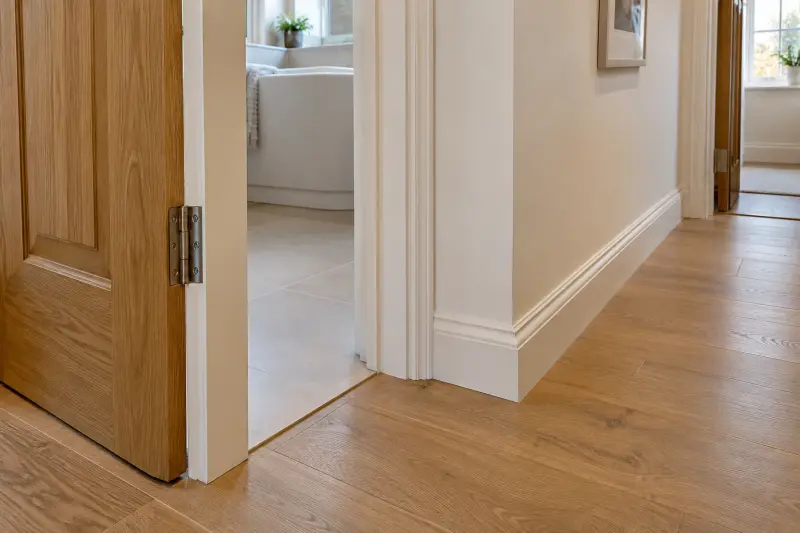
Editorial illustration Take private photographs from ordinary stable positions if the supplier requests them. Give them useful captions such as hall turn viewed from entrance or bathroom doorway from corridor. Keep identifying details and unrelated personal possessions out where practical. Label informal measurements approximate and leave difficult fields for the site review. Do not reach over a stair edge or move heavy fixtures to obtain information for a preliminary form.
Ask whether the provider needs an on-site route review. Remote photographs can support an initial discussion without establishing the same evidence as a site confirmation. Record who reviewed the route and which object or packaging state it considered. If the model or orientation changes, ask whether that review remains applicable. Do not keep a favorable route answer from one variant while ordering another with an unexamined arrival arrangement.
Include the final positioning area and relevant inspection access. Reaching the bathroom door is not the whole delivery task. The provider should explain where handling, placement and installation responsibilities join. Keep any temporary building alteration in the work scope with the responsible trade. The route record is successful when it produces a clear professional response and current plan, not when every household box is filled through guessed measurements.
Plan removal of the old bath as its own route
Ask how the existing bath and associated items will be removed and disposed of under the actual offer. The old arrangement can differ from the replacement, so a new-product route review does not automatically answer removal. Record the responsible provider, expected work boundary and the sequence connecting removal, preparation and arrival. Do not start dismantling the existing room to test a route or assume the household supplies handling and disposal.
Ask which preparation must be complete before delivery proceeds. The installer may need particular professional work or a reviewed area ready, depending on the model and site. Have the provider identify those conditions and the party confirming them. A scheduled delivery date is not proof that every preparatory responsibility is resolved. Keep the current work scope and readiness response together so each trade understands the same arrangement.
Discuss the bathroom's unavailable period in practical terms. If it is the household's only bathroom, explain that context and ask the providers how work boundaries and reopening are communicated. Do not treat a general short-installation headline as a guarantee for this room. Keep timing estimates labelled and plan through the responsible professional explanation. The delivery record should connect to ordinary household needs, not only the contractor's arrival window.
For shared access, ask the relevant property process and contractor about work routes and coordination. A hallway can be outside the private bathroom while still forming part of removal or delivery. Do not assume an interior installation means no shared-route discussion is needed. Conversely, do not invent permissions from another country's guide. The actual property arrangement and locally appropriate process should identify the requirements and written conditions.
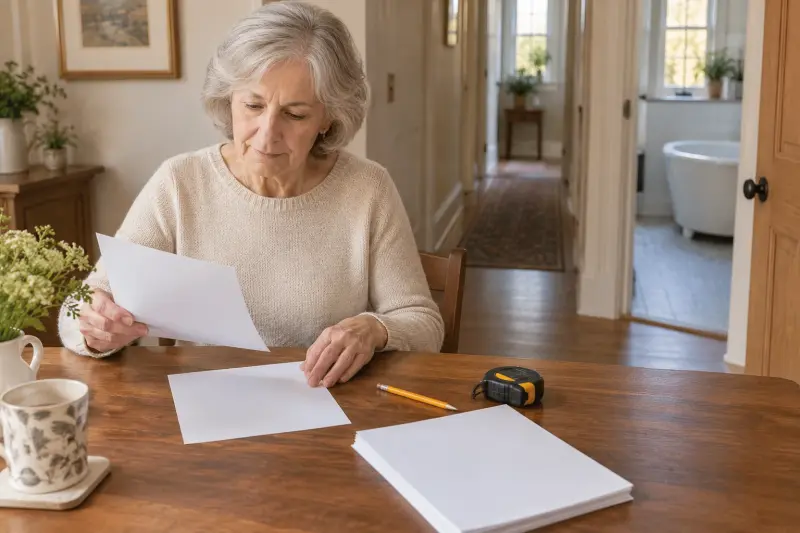
Add cleanup, surface protection and reinstatement to the scope where relevant. Who moves agreed furniture, protects the route and restores any professionally altered element? Ask for boundaries rather than rely on general careful handling language. An existing cabinet move may be a no-purchase household choice, while a frame alteration requires a defined task. The complete sequence should explain the new bath's arrival without leaving the old room or shared route responsibilities hidden.
Worked route review: the doorway fits but the corridor turns
Imagine a fictional household checking the bath's external width against the bathroom doorway. The width appears compatible, so the family assumes delivery is confirmed. A tight corridor turn occurs immediately before the doorway. The route sketch makes that missing question visible. This example supplies no actual dimension or handling conclusion; it illustrates why one opening does not establish the complete path of the delivered object.
The household asks the team to review the exact supplied bath, its packaging state and the route. It sends labelled photographs and a preliminary sketch, marking uncertain measurements. The team identifies whether it needs a site visit or further information. The household does not decide that tilting, unpacking or disassembly will solve the turn. Those methods belong to the responsible professional handling plan and applicable product instructions.
One proposal involves moving a freestanding cabinet before delivery. The family records where it would go and whether another household route remains usable. Another proposal involves professionally specified temporary building work. That task receives its own scope, responsibility and reinstatement question. Neither is assumed to be a free workaround, and a small-looking alteration is not treated as appropriate simply because the new bath is already attractive.
The household also asks about old-bath removal. Its route and sequence may differ, so the family keeps the two tasks separate. It confirms which provider handles disposal and how readiness is checked before the new unit arrives. No invented cost or deadline is used to choose among arrangements. The comparison asks what complete work has been described and which uncertainty remains.
The outcome may be a confirmed professional plan, a different product proposal or a pause while the route is reviewed. If the selected model changes, the team is asked to update its answer. The useful value is a current arrival and removal record before disruption begins. It respects the limits of household measurements and avoids promising that any bath can be forced through an unverified route with enough creativity.
Agree receipt, discrepancy and handover records
Ask the seller how the unit's identity, visible condition and supplied components are recorded on arrival. Who performs the relevant inspection, and who should receive a report of an issue? Keep the applicable seller terms and contact route privately. Do not copy a reporting deadline from another manufacturer's manual into this purchase. The provider should explain its actual process before the household relies on an assumption about returns or damage.

Have the provider explain what happens if the configuration differs from the accepted order. A bath with a similar finish can still have a different orientation or option list. Ask who confirms the identifier and resolves the discrepancy before installation proceeds. Do not authorize modification or assume the product can be reversed to answer the earlier plan. The record should connect arrival with the actual accepted configuration.
For visible condition questions, follow the responsible provider's process without attempting specialist testing yourself. A private photograph may help document an observed issue where requested, but should not be described as a complete inspection result. The installer has its own model-specific duties. The household record can identify what was noticed, when it was reported and which response followed, with no fabricated evidence of testing by our website.
Link delivery completion to installation handover without merging the milestones. Receipt of the correct product does not establish that the room work, normal-use explanation and support information are complete. Keep each responsibility in the register. Ask how the installer records unresolved items and how they affect completion or routine use. A tidy delivery form should not silently close a different task belonging to the installation or another trade.
Retain the current route answer, accepted configuration, receipt record and relevant project documents in an existing folder. Use simple location labels so another household helper can retrieve them. Keep private addresses, order identifiers and equipment details out of public checklists. A clear sequence of actual records is the useful low-cost improvement. A premium packing or storage purchase is optional and cannot replace the professional arrival plan or missing supplier response.
- Arrival identityModel, orientation and components checked through the provider process.
- Condition questionObservation, appropriate report route, and relevant seller terms.
- ResponsibilityDelivery team, installer, seller, or trade actually assigned.
- MilestoneReceipt, preparation, installation, and handover kept distinct.
- RecordDate, private document location, and unresolved next action.
Questions readers ask about walk-in bath delivery
Will the bath fit if its width is smaller than my doorway?
A single dimension does not establish the entire delivery route. Ask the professional team to review the delivered configuration, packaging, turns, height and final positioning area. Keep installed footprint information separate. The household can provide a labelled sketch while leaving the handling conclusion with the responsible provider.
Can it be unpacked outside to fit?
Ask the supplier about the model-specific handling and inspection plan. Do not assume unpacking or disassembly is permitted or sufficient for the route. The provider should explain which state is used for each stage and who handles it. A household guess about removing components is not a confirmed arrival arrangement.
Should I take the old bath out first?
Agree the professional sequence and resolve essential arrival and preparation questions before disruption is arranged. Ask who removes and disposes of the old unit and who confirms readiness for the new one. Do not dismantle equipment to investigate a route. Keep the bathroom's practical access needs and relevant work boundaries in the project conversation.
What if a cabinet blocks the route?
A movable item can be discussed as a separate temporary arrangement, including its new location and effect on other household use. Fixed elements need appropriately defined professional review. Record who moves and restores what. Do not treat cutting a frame or altering fitted services as an ordinary no-cost household workaround.
Who checks damage or the wrong variant? Ask the seller and installer for the actual receipt, inspection and reporting process. Retain the applicable terms and contact privately. A similar-looking product may still differ from the accepted orientation or options. Resolve a discrepancy through the responsible provider rather than assume modification will make it equivalent.
What can I do without buying packing supplies?
Organize the exact model information, label the route, describe ordinary furniture and provide safe preliminary photographs if requested. Mark uncertain measurements clearly and ask for the appropriate professional review. A plain sketch and existing folder can support a strong arrival plan without suggesting the household should handle, test or disassemble the bath itself.
MAKE THE SPEND MEANINGFUL
Before adding to the basket.
- Move agreed nonessential furniture before professional delivery.
- Use existing photos and a paper sketch for the initial route brief.
How this guide was prepared
AI-assisted editorial research, checked against the linked primary sources. Product testing and a credentialed individual review are not claimed.
source-checked editorial; no hands-on testing or expert suitability assessment claimed
How we use sources and AI assistance ↗Sources & fact checks
The guide separates sourced facts from editorial questions and examples. We have not claimed hands-on product testing. How we use sources and AI assistance.
Found an error or an outdated detail? Contact the editorial team.