

In brief
Read bath, installation and accessory cover as separate responsibilities. Ask which owner, model, purchase route and location the terms cover, then identify labour and removal exclusions. A lifetime heading is the start of the conversation, not a complete repair-cost promise.
IN THIS GUIDE
Read the conditions behind the heading
Kohler’s Belay warranty page conditions cover on the original consumer, authorized installation and specified locations. American Standard’s linked manual distinguishes bath, component and door-seal coverage and lists installation-related exclusions. These are provider-specific examples of conditions hidden by a short headline.
Request the full applicable document for the exact supplied model and seller. Record its date, eligible purchaser, starting event and claim route. Do not assume a second-hand unit, display bath or different seller has the same cover. If the offer’s wording conflicts with the document, ask for a written clarification before purchasing.
Separate a replacement part from the whole repair
Create fields for product parts, diagnosis, labour, attendance, removing equipment, reinstalling it and restoring surrounding finishes. Add taps, screens or other accessories with their own documents where supplied separately. Ask which business owns each responsibility and who the homeowner contacts first.
A manufacturing defect and an installation fault may follow different reporting routes. You do not need to diagnose the fault yourself to prepare the record. Ask the seller how reports are triaged and how any chargeable work is approved. A broad assurance should become an understandable written process.
Worked decision: a covered seal and uncertain attendance
Suppose a proposal emphasizes lifetime door-seal coverage, but the household cannot find an answer about a technician’s visit and fitting labour. The seal cover may be useful, yet the complete repair cost remains unclear. Add attendance and labour as separate rows and request the relevant clause or provider reply.
If the bath has been installed within a wider bathroom renovation, ask who restores affected finishes if access is needed. This does not mean the warranty is poor; it means the household needs the whole responsibility map. Compare another offer on those same rows rather than choosing the larger lifetime headline.
Build a warranty responsibility table
Complete the rows below and store the applicable documents with the accepted order and service information. Keep private proof of purchase in the household folder. Mark conditional coverage accurately and avoid replacing detailed terms with a homemade yes-or-no rating.
Before buying additional cover, check what it adds beyond the included arrangements and which tasks still remain excluded. An existing folder costs nothing and can be more useful than another protection product. Review the record after an accessory change or service renewal, retaining the original terms that applied to the purchase.
- ProductComponent, covered purchaser, period and conditions.
- InstallationResponsible provider and workmanship document.
- RepairDiagnosis, labour, travel, removal and making-good terms.
- ClaimFirst contact, required evidence and approval for charges.

Identify which document applies before comparing a lifetime heading
Start with the exact supplied model, purchase route, installer and location. Request the complete warranty applicable to that order and keep its date or revision with the accepted documents. A current webpage can introduce cover while still leaving applicability questions for a particular product or sale. The buyer's first task is to establish which terms govern the proposed purchase, rather than selecting whichever online heading appears most generous.
Kohler's current US sales page describes Belay cover with original-consumer, installation and US/Canada conditions. Its linked full PDF describes different geographic scope and separately addresses other components. These two primary sources do not use identical descriptions. We do not resolve that discrepancy for the reader. Ask the provider to identify the applicable current document and explain any difference in writing before relying on the coverage summary.
Record the eligible purchaser and start event exactly as supplied. Does a term refer to the original consumer, purchase, manufacture, installation or another event? Keep any relationship to home ownership clear where the document states it. Do not infer transferability or identical coverage for a display unit, used bath or different seller. Those questions should be answered against the actual product and terms rather than a general product family's marketing page.
Separate the warranty summary from the complete document in the index. The summary can help locate the topic, while the complete conditions define scope and exclusions. Retain the provider's clarification as another dated record. If a manual and a new warranty sheet differ, ask which applies instead of combining the favorable phrases. This article organizes a purchasing conversation; it does not decide legal enforceability or remove locally applicable consumer rights.
Finish the first review with a coverage map showing product, installation, accessories and any additional plan. Identify the party supplying each promise. A seller may provide a separate arrangement beyond the manufacturer's document, but the household needs its actual wording. Missing labour or attendance information stays unanswered. A longer headline can be useful while still not establishing the total work or charge involved in a future repair.
Break a repair into the tasks the documents need to address
Create rows for reporting, diagnosis, eligible product or part, attendance, removal, fitting or reinstallation and restoration of surrounding finishes. Ask which party handles each and which document addresses its scope or charge. A replacement item and the complete repair are different questions. Do not assume a covered door seal establishes free labour, or that excluded manufacturer labour means no separate dealer arrangement exists.
Kohler's linked full warranty PDF expressly excludes removal, installation and labour costs from the manufacturer's stated responsibility. Keep that narrow document example attached to its source and applicability question. Ask the provider what additional installation or service cover is actually offered for the proposed order. The household can then understand how promises join rather than treat a lifetime product heading as a complete no-cost repair commitment.
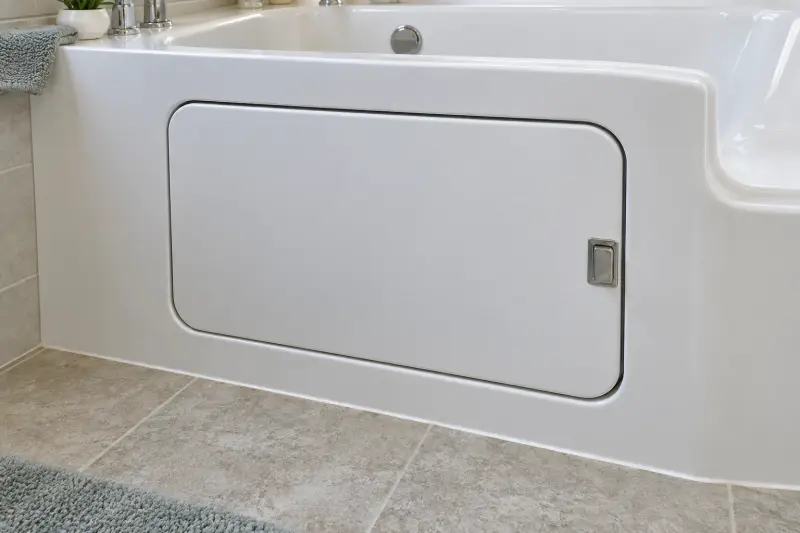
For a bathroom renovation, include access and making good. If equipment work needs access through a finish, which provider handles that task and what terms apply? Request the actual response without predicting that removal will be necessary. A possible exposure is not a forecast of product failure or a typical future bill. Keep uncertain tasks as questions rather than inventing an annual repair allowance or average charge.
Give separately supplied taps, screens and accessories their own document references. An accessory might have a different supplier or warranty route from the bath. Do not assume the main product's coverage heading applies to every item pictured in the completed-room advertisement. Ask which components are included in the order and where their applicable terms are recorded. A complete model and fitting list makes the coverage conversation more precise.
Record conditional, included, excluded or unanswered according to the actual wording. Avoid a homemade yes-or-no protection score that hides conditions. If a provider's response is broader than its document, request clarification rather than assume the broader promise automatically wins. The worksheet gives the household a concrete follow-up for each gap and helps compare genuine offers on the same repair-task boundaries.
- TaskReport, diagnose, supply, attend, remove, fit, reinstall, or make good.
- Responsible partyManufacturer, seller, installer, or separate accessory provider.
- EvidenceApplicable full document and written clarification.
- StatusIncluded, conditional, excluded, or unanswered, preserving actual scope.
Compare care conditions and the actual reporting process
Ask which care and use conditions the applicable warranty states and obtain the corresponding current instructions. The full Kohler PDF links improper care and cleaning to its coverage conditions. This is a product-document example, not a universal cleaning rule or an assessment of the reader's future claim. Keep the correct care source in the household folder rather than apply another manufacturer's procedure because it appears online.
Request the first reporting route and information needed. The provider may ask for the model, purchase evidence and an ordinary description of the issue. Keep those identifiers private and obtain them through supplied records or an appropriate provider explanation. Do not dismantle the bath to diagnose a claim. A clear observation and correct contact route can be prepared without the household deciding whether a suspected problem is a manufacturing or installation fault.
Ask how reports are triaged when more than one party supplied the project. The bath, plumbing, electrical work or room finish can have different responsibilities. The household should know who receives the first question and how it is directed onward. Record the actual process and any charge-approval question. Do not turn a general customer-care number into a guaranteed response time or promise that the manufacturer accepts every reported concern.
Keep proof of purchase and the accepted configuration together. If the provider requests registration or another task, record its actual requirement and confirmation rather than inventing a universal rule. A bank transaction may show payment without identifying the exact supplied model. Ask for missing records through the legitimate route. A plain index helps another household contact find the relevant evidence without exposing unrelated financial information.

When a report is resolved, retain the response, work record and any updated instruction. Describe what the provider actually confirmed rather than writing your own coverage verdict. If an issue or consequential term remains disputed or unclear, seek locally appropriate advice with the documents available. This article does not determine the legal outcome. Its useful role is an understandable responsibility and evidence record before and after the purchase.
Worked comparison: a covered seal with unanswered fitting labour
Imagine a fictional offer emphasizing door-seal coverage. The household can find the product wording but no clear answer about a technician's attendance and fitting labour. It initially assumes any seal-related repair would be free. The worked comparison separates product coverage from the tasks required to investigate and perform work. It does not predict a seal failure or claim that a real provider has refused support.
The household makes rows for diagnosis, supplied seal where eligible, visit, fitting and any relevant access or making good. It asks the seller which document addresses each. Some rows may refer to manufacturer terms, others to a separate installer arrangement, and some remain unanswered. The household records those boundaries without declaring the warranty poor merely because different promises are documented separately.
Next, it asks about the actual claim route and required purchase evidence. The seller explains how an issue is reported and how a chargeable task would be approved if relevant. The household retains the response privately. It does not diagnose a hypothetical concern itself or assume a lifetime label establishes every future decision. The comparison is useful because it identifies what needs to be asked before relying on complete repair cover.
Another offer is reviewed on the same rows. It may include a different installation or labour arrangement, but its conditions still need reading. The household does not choose the boldest heading or count the number of included categories as a safety score. A more complete responsibility map can help explain value while the user's routine, project scope and actual budget remain separate parts of the decision.
The result may be a clarified original offer, a different documented arrangement or a decision not to buy additional cover. An existing folder can organize the evidence without another protection product. The worked lesson is that a covered item can have value while another task remains outside it or undefined. Keeping that distinction visible lets the reader make an informed ownership choice without invented repair prices, claims or future outcomes.
Check additional protection by what it adds
Before considering another cover product, map the included manufacturer, seller and installation arrangements. Ask what the proposed extra plan adds, which tasks overlap and which exclusions remain. Do not buy another product simply because the lifetime headline left a question unanswered; first ask the relevant provider to explain the actual documents. A clearer answer can be more valuable than a second agreement that repeats the same limited scope.

Record the extra plan's term, eligible equipment, responsible business and current charge as supplied, keeping conditions beside it. Ask how diagnosis, labour, attendance and access work are addressed where relevant. A broad protection label does not establish those tasks. This guide gives no invented plan price, savings forecast or failure probability. The reader's comparison should use the actual offer and locally appropriate advice if a consequential term is unclear.
Keep required upkeep separate from optional protection. A plan may supply a service task, but its name alone does not establish that every model responsibility is fulfilled. Ask the provider to reconcile the arrangement with the current instructions. Omitting required care to make ownership appear cheaper is not an ethical savings method. If the documented commitment does not fit the household, reconsider scope or seek another appropriately reviewed option.
Ask about changes of owner, home or supplier as distinct applicability questions. Do not assume cover transfers because the bath remains installed. A change in household contact also needs accurate private records without necessarily changing the eligible purchaser. Record the actual provider answer and keep it with the applicable document. Avoid promising a resale benefit or future support arrangement that no source has confirmed.
Use the responsibility table at handover and after a genuine update. Store complete documents, accepted terms and private purchase evidence in an existing folder. A modest organizer may help retrieval where needed, but the information is the value. The ethical outcome can be keeping included cover, choosing a clearly useful additional arrangement or declining it. The decision should follow what the plan actually adds to the known responsibilities.
Questions readers ask about walk-in bath warranties
Does lifetime mean every repair is free?
Read the applicable complete conditions and separate product cover from diagnosis, attendance, labour, removal and making good. A headline does not establish the entire task. Ask what any separate seller or installer arrangement adds. Keep document applicability visible, including where a sales summary and its linked full terms use different descriptions.
Why do a warranty page and PDF differ?
Preserve both sources and ask the provider which current document applies to the actual model and order. Do not merge the favorable wording or silently select one. Kohler's cited sources provide a concrete example of differing geography descriptions. The purchasing record should contain the provider's clarification rather than our invented resolution of a consequential term.
Does the bath warranty cover my taps and screen?
Identify the supplied components and their actual terms. Separately sourced accessories may have another document or provider. A completed-room photograph does not establish shared coverage. Add each item to the responsibility table and ask for its applicable claim route. Keep a missing document as an open question rather than assume the main heading covers everything.

What records should I retain?
Keep the accepted configuration, applicable full terms, provider clarifications, proof of purchase, installation records and relevant care instructions privately. Ask what the actual reporting process requires. A clear index can help another household contact retrieve information without exposing bank or account details publicly. Do not discard original applicable terms solely because a website later changes.
Should I buy extra protection?
First establish what is included and what the additional offer genuinely adds. Compare work scope, conditions, current charge and remaining exclusions using the actual documents. This guide supplies no repair-cost forecast or universal recommendation. The useful choice can be no additional purchase when the proposed plan does not answer a valued uncovered task.
What if a coverage question is disputed?
Use the actual provider process and obtain locally appropriate advice with the complete documents if needed. Record observations and responses without diagnosing the product or deciding legal enforceability yourself. Your paper responsibility table can organize the evidence; it cannot approve a claim or replace applicable rights. A clear record makes the next conversation more precise without promising its outcome.
What if a seller says the whole repair is included?
Ask which actual seller or installer document supplies that additional promise and how it joins the manufacturer terms. Record the work covered, relevant conditions and responsible party rather than infer that a broad verbal statement changes another document. A genuinely broader arrangement may have value, but the household should be able to identify it in the accepted offer. Keep any consequential ambiguity for clarification or locally appropriate advice before relying on it.
MAKE THE SPEND MEANINGFUL
Before adding to the basket.
- Reuse a folder for documents and proof of purchase.
- Avoid additional protection until its incremental scope is clear.
How this guide was prepared
AI-assisted editorial research, checked against the linked primary sources. Product testing and a credentialed individual review are not claimed.
source-checked editorial; no hands-on testing or expert suitability assessment claimed
How we use sources and AI assistance ↗Sources & fact checks
The guide separates sourced facts from editorial questions and examples. We have not claimed hands-on product testing. How we use sources and AI assistance.
- Kohler: lifetime limited bath warranty ↗
- American Standard: walk-in bath installation and owner instructions ↗
- Kohler: linked Belay walk-in bath full warranty PDF, applicability requires provider confirmation ↗
Found an error or an outdated detail? Contact the editorial team.