

In brief
Ask the plumber or installing provider to evaluate the actual bath, hot-water system and other household demands together. Do not buy a larger heater from a generic bath-size rule. Model capacity, usable hot-water supply and recovery are different questions.
IN THIS GUIDE
Bring the exact model information
Kohler says its dealer reviews water-heater age, condition and volume during the in-home quote. That is a manufacturer-specific assessment process, not proof that a standard tank is sufficient in every home. Obtain the proposed bath’s current specifications and installed configuration first.
Keep the documents together if product-page and specification-sheet figures appear different. Ask the provider which value applies to the actual bath and routine. Do not pick whichever number makes an existing heater seem adequate. A written clarification can prevent unnecessary replacement as well as an unsuitable assumption.
Describe the household supply and routine
Record the heater type, identification and service information already available; do not open equipment or adjust settings to collect data. Tell the plumber about other normal hot-water use near bathing time and the reader’s preferred sequence. These details help frame the professional evaluation without inventing a sizing formula.
Ask whether any proposed change involves the heater, pipework, controls or another part of the system. Request the reason and scope for each recommendation. A change justified by this installation should be distinguished from unrelated replacement advice, even when both could sensibly be considered together.
Worked decision: the unnecessary upgrade assumption
Suppose a sales conversation starts with a recommendation for a larger water heater before the exact bath is selected. Ask what model data and supply evaluation support that recommendation. A different bath configuration or daily routine may change the question; the larger heater should not become an automatic accessory purchase.
Conversely, retaining an existing heater is not a confirmed saving until the qualified provider has reviewed it. Request a written answer covering the proposed bath and household conditions. If replacement is needed, compare complete professionally specified work, including any associated changes, rather than ordering a tank from nominal capacity alone.
Use a plumber conversation brief
Fill in the rows below using supplied documents and professional replies. Keep unresolved figures explicit. This is an evidence request, not a calculation approving the system. Label any performance discussion with the conditions the provider used.
The practical low-cost starting point is gathering existing manuals and arranging a clear evaluation. Do not raise a heater’s temperature yourself to compensate for an uncertain supply. Temperature and control questions belong in the installation discussion, with personal advice where relevant. A useful answer may confirm the current system, revise the bath proposal or specify a necessary change.
- BathExact configuration and confirmed operating-water specification.
- SupplyExisting heater information and professional condition review.
- RoutineOther household demand and chosen bathing sequence.
- ProposalReason, full scope and written confirmation for any change.

Separate bath volume, hot-water provision and the bathing routine
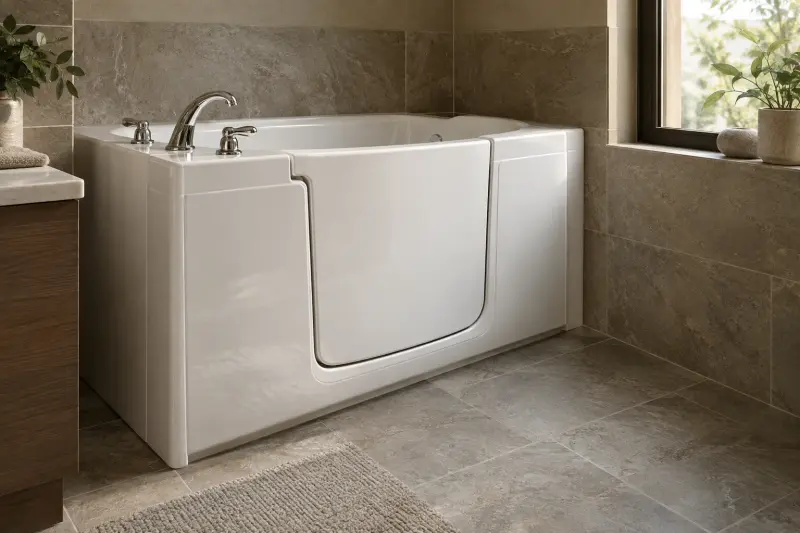
Start with the exact bath configuration rather than a generic walk-in tub size. Ask the provider for the current specification and an explanation of any capacity figure it uses. A nominal product volume, a stated operating water quantity and the household's usable hot-water supply are different questions. Do not treat one number as automatic proof that a tank is adequate or that replacement is necessary. The qualified evaluation should connect the actual bath to the existing system.
Ask what the bath figure represents and under what conditions. Does the document refer to an operating level or another product measure? Does it apply to the proposed variant and installed options? If a product page and specification sheet appear inconsistent, keep both and request clarification. The cited American Standard page and sheet contain differing capacity descriptions. We do not choose a figure or derive a sizing rule from that discrepancy; the provider should identify the applicable information.
Describe the intended routine in ordinary terms. Does the user want a soak, a handshower within the sequence or another offered arrangement? Explain other usual household hot-water activity near that time. These details frame the professional discussion without assigning an invented demand to every older adult or predicting future use. A clear routine can prevent the evaluation from relying on assumptions the household never agreed.
Ask the provider to distinguish hot-water storage, delivery and any relevant recovery question for the actual installation. A larger labelled tank does not by itself describe what reaches the bath under the stated conditions. Nor does a familiar existing heater prove it will answer a changed task. This guide supplies no sizing formula or temperature setting. The useful answer states the evaluated equipment, conditions and professional recommendation in writing.
End the first brief with confirmed information and open questions. Gather existing model identification and supplied service records if they are available safely. Do not open equipment or alter controls to obtain another field. The no-purchase start is organizing the evidence and asking for the right assessment. It can support retaining the existing system, changing the proposed bath or defining necessary work without making replacement an automatic companion purchase.
Give the plumber a household demand brief
Write the hot-water activities that matter around the intended bathing time. Use the household's real pattern rather than a list copied from another home. There might be another wash, kitchen use or a routine that can be discussed flexibly. Keep preference separate from a requirement that cannot be changed casually. Where the routine intersects with care or personal health advice, obtain the relevant guidance rather than rescheduling it solely to fit an equipment offer.
Record the existing system from information already supplied. The type, model and service documentation can be useful, but leave unfamiliar technical fields for the qualified professional. Do not climb into a restricted space or remove a cover to read a label. Ask which information the installer needs and whether it can obtain it during the site review. An honest unknown is better than guessing a specification from the appearance of the tank.
Editorial illustration
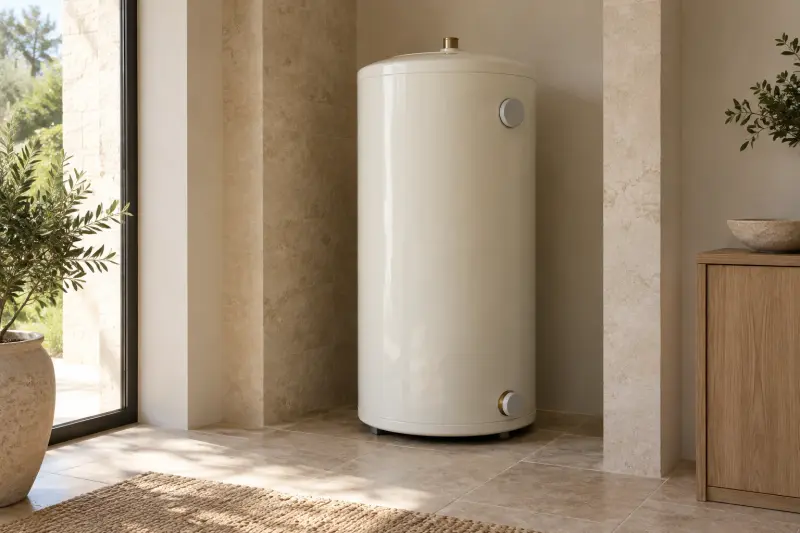
Kohler's US FAQ says its dealer reviews the water heater's age, condition and volume during the in-home quote. That is a manufacturer-specific process, not proof that a standard heater always works or a larger unit is routinely needed. Ask your provider to explain its own evaluation and the proposed bath information it uses. Record who performed the review and which conditions the recommendation addresses.
Ask whether a recommendation concerns the heater, pipework, controls or another part of the installation. Separate the reason for each proposed change and the trade responsible. A sensible recommendation about unrelated existing equipment should not be silently included as a mandatory bath requirement. Conversely, a necessary project change should not be omitted from the scope because it makes a displayed bath price less attractive. The written explanation helps the household understand both cases.
Give each recommendation a next evidence step. Retaining the system needs a relevant professional answer; replacing it needs a defined specification and work offer; revising the bath needs an updated configuration and routine review. A household worksheet can organize those options without approving any system itself. It should help the plumber respond precisely and help the reader distinguish confirmed project need from a broad sales suggestion.
- Household routineIntended bathing sequence and other relevant hot-water activities.
- Existing evidenceSupplied model information and service record; unknown fields stay blank.
- Professional reviewWho evaluates the actual system and chosen bath.
- Recommendation scopeHeater, pipework, controls, or another task, with its stated reason.
- Next evidenceConfirmation, specified work offer, or revised bath proposal.
Understand what an inline bath heater does before relying on it
Ask the bath provider to distinguish the household water heater from any heating feature included in the bath. The terms can sound similar while describing different tasks. American Standard's cited series sheet states that its whirlpool inline heater maintains temperature during operation and does not heat cold water to the desired bathing temperature. This specific product explanation is a reason to request the exact feature scope, not a universal statement about every bath heater.
Identify which variant actually includes the feature. A series sheet may cover soaking, whirlpool, air and combination systems on the same page. Do not assume a feature illustrated for one configuration is supplied in the selected soaker. Ask the provider to name the model and ordered options on the offer, then link them to the current document. A vague heated bath description cannot substitute for a defined supplied system.
Keep the feature's water-supply role separate from comfort language. A heating option may have a documented function while leaving the original filling and hot-water evaluation unchanged. Ask the professional whether it affects the recommendation and why. Do not assume an add-on heater makes an otherwise unconfirmed household supply adequate. Equally, do not dismiss an option solely because it does not perform the task you initially imagined; clarify the actual role before weighing its value.

Editorial illustration
Ask about installation and ownership responsibilities for the chosen option. Which professional specifies any relevant electrical provision, what care applies and which document explains normal use? The American Standard manual contains configuration-dependent electrical information for professionals. This article supplies no circuit instructions or ratings. The household should receive the actual scope and appropriate supervised explanation rather than select components or alter the supply independently.
Compare the option only after the main routine and water provision are understood. A simpler no-jets bath may answer a reader's preference, while another reader may value an offered feature after its purpose is clear. The ethical buying question is what task it serves and what additional commitment it brings. The feature should not be presented as treatment for a condition or an excuse to skip the qualified assessment of the household's hot-water system.
Worked decision: the upgrade proposed before the bath is defined
Imagine a fictional household told early in a sales conversation that it should buy a larger water heater for a new walk-in bath. The exact model and routine have not been agreed. The household records the recommendation as provisional and asks what product data and supply review support it. The example supplies no real tank size, price or promised performance; it demonstrates a way to avoid turning an unverified assumption into a purchase.
The provider identifies the proposed bath and supplies its documents. A capacity description appears different between sources, so the household asks which applies to the configuration and how it informs the evaluation. It does not choose the smaller figure to justify retaining the heater or the larger figure to justify replacement. The relevant professional should explain the system under the stated conditions, including the household's actual routine.
The household then gives the plumber its demand brief and existing documentation. The professional's response may confirm the present arrangement, identify a necessary change or request further information. Each outcome is recorded with scope and conditions. Retaining the equipment is not advertised as a saving before the evaluation; replacing it is not treated as mandatory because the sales discussion began with that suggestion.
If a change is specified, the household asks for a complete work offer. It includes the recommended equipment or work, associated services and making good, with responsibilities stated. Optional comfort systems remain separate unless the professional explains their relevance. A retailer's tank listing alone does not answer the installed project. The household compares genuine professionally defined options rather than selecting by nominal capacity or an invented online price average.
The final purchase decision may change the bath proposal instead. A different routine or configuration deserves its own evaluation, not an automatic assumption of lower demand. The household keeps the revised model and supply answer together. The useful outcome is a documented reason for each commitment. Gathering the correct information before ordering can prevent an unnecessary accessory or reveal necessary work while the scope is still reviewable.
Connect the supply decision to quote and handover
Put any water-system work in the bath project comparison as its own row. Identify the responsible provider and whether the amount or scope is confirmed, allowed, excluded or unanswered. Ask when the work must occur relative to bath installation and who confirms readiness. A bath quote should not look complete because an unresolved heater recommendation has been left outside the visible total. Keep the defined professional response beside that row.
Ask how changes are approved if the site evaluation reveals another requirement. The provider should explain the revised scope and document it through the actual project process. Do not assume every change can be made without consequences or accept a new total with no account of what work it buys. Keep the selected bath model and configuration visible so the supply recommendation remains connected to the equipment being ordered.
Temperature and control questions need their own discussion. Do not raise an existing heater setting to compensate for unconfirmed supply or adopt a temperature from a generic buying guide. Ask the installer about the appropriate controls and normal-use explanation for the system, with personal advice where relevant. This keeps a budget concern from becoming an improvised technical adjustment. A paper worksheet organizes questions rather than authorizes a change to equipment.
At handover, request the actual supplied manuals, normal bathing sequence and support route. Ask which water-system documents or work records join the bath folder and who handles a question about performance. The household should know whether to contact the bath provider, plumber or another identified party. Avoid describing a generic demonstration as proof that every condition in the home has been tested by our editorial team.
Retain the evaluated configuration, recommendation and completion record privately. If the household's water arrangement or bath options later change, return to the responsible professional rather than rely indefinitely on the old brief. A clear record can make that conversation precise. No extra app, measuring gadget or speculative heater accessory is needed merely to keep the evidence organized; an existing folder and a concise index can do the task.
Questions readers ask about water heaters for walk-in baths
What size water heater does a walk-in bath need?
Ask the qualified provider to evaluate the exact bath, existing system and household routine. This guide supplies no universal tank-size rule. Product capacity, usable supply, delivery and recovery questions are distinct. Keep the applicable model information and professional answer together before treating either retention or replacement as the confirmed option.
Does the bath's capacity equal the hot water I need?
Ask what the stated capacity measures and how the professional applies it to the actual routine. Do not assume a nominal product figure translates directly into a tank requirement. If source figures differ, request clarification rather than choosing whichever supports the preferred purchase. A worksheet should expose that question, not disguise it with a simple but unsupported calculation.

Can an inline heater replace the household heater?
Ask about the exact option's documented role. American Standard's cited sheet describes a temperature-maintenance function for its whirlpool inline heater rather than heating cold water to the desired bathing temperature. Other products need their own evidence. Do not rely on a heating feature to settle an otherwise unconfirmed household supply question.
Should I replace an older heater automatically?
Obtain the relevant professional review of its condition and the proposed task. Age can be information considered in an evaluation, but this article does not define an automatic replacement threshold. Separate necessary bath-related work from other advice and request the reason and scope. The existing system remains an option only where the appropriate answer supports it.
Can I turn the temperature up to make the supply last?
Do not make an improvised setting change to compensate for an unanswered sizing question. Discuss temperature, controls and the actual system with the qualified provider, obtaining personal guidance where needed. A sales comparison is not a technical instruction. Keep the recommendation within the professionally specified project and supplied normal-use information.
What should be included in the quote?
Any professionally recommended water-system change should have a defined scope, responsible provider, timing and amount status. Keep it separate from optional bath comfort features and from assumed financial support. Ask who handles questions after completion and retain the relevant records. A complete installed-work offer is more informative than a retailer's nominal tank listing or an invented budget average.
MAKE THE SPEND MEANINGFUL
Before adding to the basket.
- Reuse existing manuals for the initial plumber brief.
- Keep a professionally confirmed suitable system rather than upgrading by default.
How this guide was prepared
AI-assisted editorial research, checked against the linked primary sources. Product testing and a credentialed individual review are not claimed.
source-checked editorial; no hands-on testing or expert suitability assessment claimed
How we use sources and AI assistance ↗Sources & fact checks
The guide separates sourced facts from editorial questions and examples. We have not claimed hands-on product testing. How we use sources and AI assistance.
- Kohler: water, door, fill and drain questions ↗
- American Standard: compact soaker bath configuration ↗
- American Standard: 2848.115 model specification sheet ↗
- American Standard: walk-in bath installation and owner instructions ↗
Found an error or an outdated detail? Contact the editorial team.