
In brief
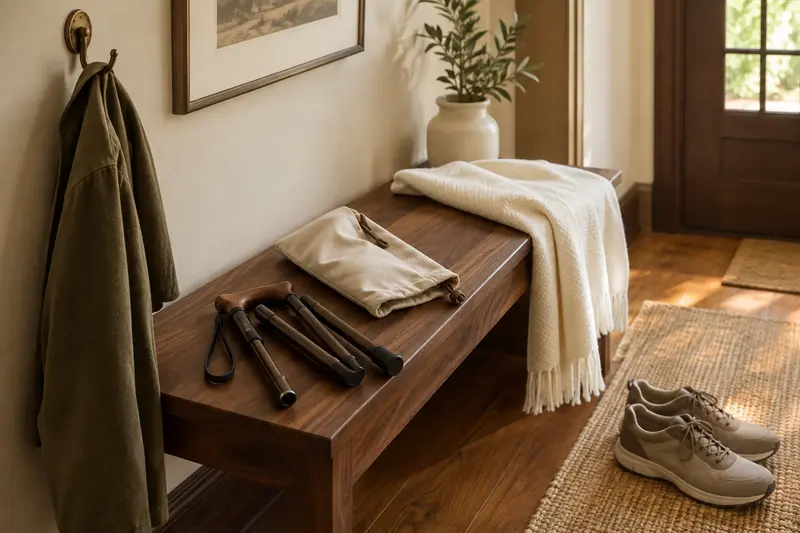
A folding cane suits someone who needs light balance support some of the time and wants to stow the cane in a bag or car. Check two things first: the height range must put the handle at your wrist crease, and the weight limit must sit well above your body weight. Ask a physical therapist if you need to lean heavily.
Free tool: Cane and walker height calculator ↗
Shortlisted for this decision
Affiliate-
Shortlisted
Rehand Foldable Cane
For a cane that folds into a bag
Folds to 14 inches for a bag or car pocket, with eight height settings and a 350 lb rating.
Check price on AmazonCheck first: Light balance support only; ask a physical therapist if you lean heavily.
-
Shortlisted
Rehand Self-Standing Cane
For keeping hands free, self-standing base
The pivoting four-prong base stands on its own, so the cane is not dropped when both hands are busy.
Check price on AmazonCheck first: The wider base can catch on stair edges; not a prescribed quad cane.
-
Shortlisted
Vive Folding Cane
For very light carrying on trips
At 8 oz it is very light to carry folded for trips and outings.
Check price on AmazonCheck first: Its 250 lb limit is lower than some canes; check the user's weight first.
Affiliate links: we may earn a commission from qualifying purchases at no extra cost to you. Prices are shown only on Amazon. Amazon.com (US listing). See the full comparison ↓
Documented options
Folding cane guide: options compared
Options based on manufacturer documentation. Retailer links are affiliate links: we may earn a commission from qualifying purchases.
Affiliate retailer links
-
REHAND Walking Cane - Foldable, Adjustable, Collapsible Walking Cane
Exact variant: Foldable cane with all-terrain tip and travel bag
View product details on Amazon — United States -
REHAND Walking Cane - Foldable, Adjustable, Collapsible Walking Cane
Exact variant: Foldable cane with all-terrain tip and travel bag
View product details on Amazon — France -
REHAND Walking Cane - Foldable, Adjustable, Collapsible Walking Cane
Exact variant: Foldable cane with all-terrain tip and travel bag
View product details on Amazon — Spain
Affiliate retailer links
-
REHAND Walking Cane - Foldable, Adjustable, Self Standing Pivot Walking Cane
Exact variant: Self-standing pivot base, soft handle grip, with travel bag
View product details on Amazon — United States -
REHAND Walking Cane - Foldable, Adjustable, Self Standing Pivot Walking Cane
Exact variant: Self-standing pivot base, soft handle grip, with travel bag
View product details on Amazon — Germany -
REHAND Walking Cane - Foldable, Adjustable, Self Standing Pivot Walking Cane
Exact variant: Self-standing pivot base, soft handle grip, with travel bag
View product details on Amazon — France -
REHAND Walking Cane - Foldable, Adjustable, Self Standing Pivot Walking Cane
Exact variant: Self-standing pivot base, soft handle grip, with travel bag
View product details on Amazon — Spain
Affiliate retailer links
-
Vive Folding Cane - Foldable Walking Cane
Exact variant: Fold-up, adjustable, lightweight
View product details on Amazon — United States
IN THIS GUIDE
Who a folding cane suits, and who needs something else
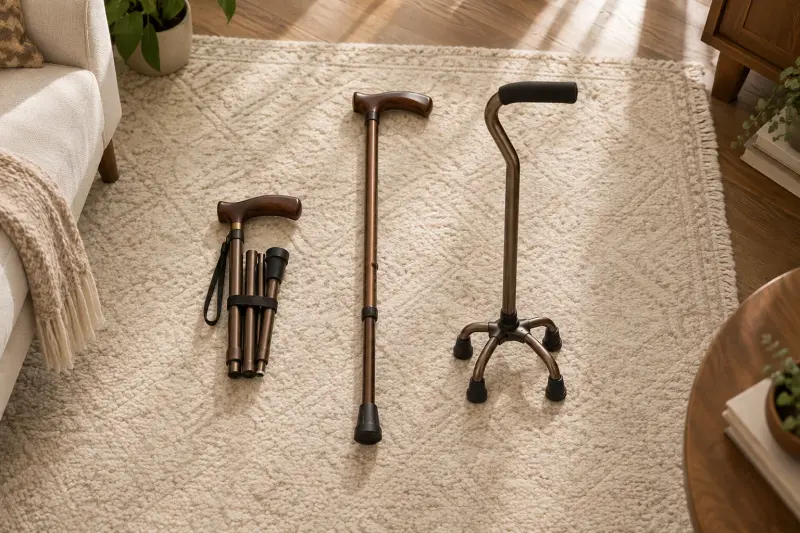
A folding cane is a single-point cane that breaks into sections held together by an elastic cord. It suits people who walk fairly well but want a steady touch point on outings, in crowds or on uneven paths.
It is not the right tool for everyone. Mayo Clinic notes that a quad cane, with four tips, gives a broader base of support, and someone who leans hard on a cane may need that or a walker instead.
- Good fit: occasional support, travel, trips out of the house, a spare cane for the car.
- Think again: daily heavy leaning, recent stroke, or frequent near-falls.
- Ask a physical therapist if you are unsure how much support you need.
- A cane that folds still needs to lock firmly at every joint before use.
Measure before you buy a walking cane for seniors
Height matters more than brand. Mayo Clinic advises that with your arm hanging straight down, the top of the cane should line up with the crease in your wrist, and your elbow should bend about 15 to 30 degrees when you hold it.
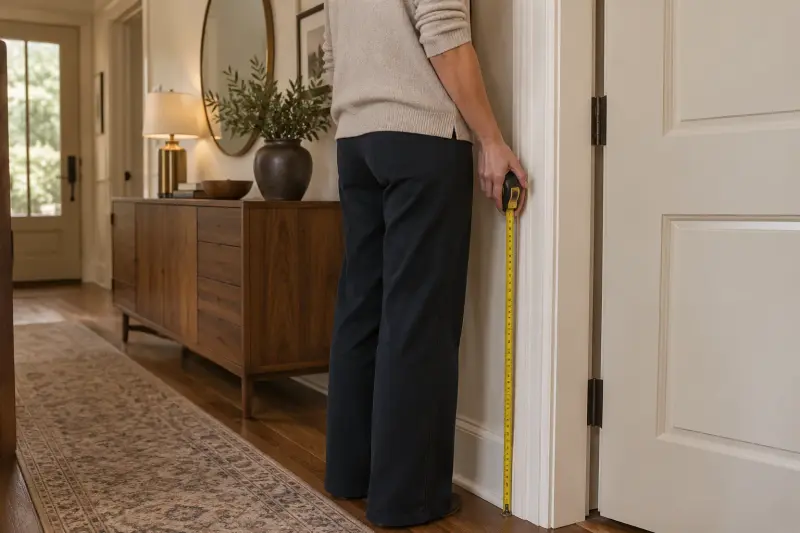
Measure in the shoes you wear most. Then check that this number falls inside the cane's adjustment range, not at the very top or bottom of it.
- Wrist-crease height in everyday shoes, measured by a helper.
- Your body weight, compared with the cane's stated weight limit.
- Grip comfort: Mayo Clinic says numbness or hand pain suggests a poor fit.
- Hand size and any grip weakness, which may favor a larger or shaped handle.
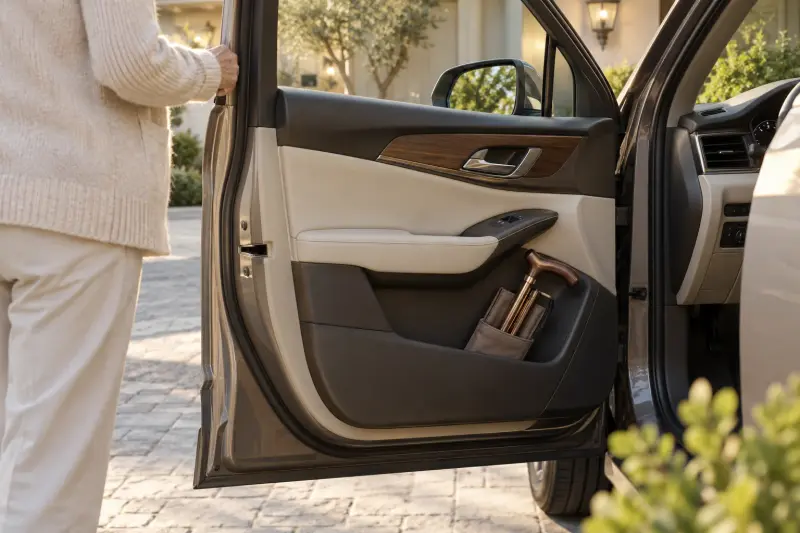
- Where you will carry it folded: purse, backpack or car door pocket.
How the three picks compare
These three are sold on Amazon.com and have specs on their makers' own pages. We list the same facts for each so you can match them to your measurements.
None of these specs tells you whether a cane is right for your balance. They only tell you whether it can fit your height, weight and travel routine.
- Rehand Foldable Walking Cane: 8 height levels from 31 to 38 inches, 350 lb limit, 1.3 lb, folds to 14 inches, travel bag included.
- Rehand Self-Standing Walking Cane: 31 to 38 inches in 8 levels, 350 lb limit, folds to 14 inches, four-prong pivoting base that stands on its own.
- Vive Folding Cane: fits users about 5 feet to 6 feet 6 inches, 250 lb limit, weighs 8 oz, corrosion-resistant frame.
- All three fold, and all three are single-point canes in use, even the one with a standing base.
Self-standing base or plain rubber tip
A self-standing base lets the cane stay upright when you let go, which helps when you need both hands to pay or open a door. The trade-off is a wider foot that can catch on stair edges or rough ground.
A plain rubber tip is smaller and lighter. It is easier on stairs and curbs, but the cane will fall over if you lean it badly. Replacement tips are sold by shaft diameter, so check the cane tip size before ordering a spare.
- Choose a standing base if dropping the cane is your main problem.
- Choose a plain tip if you climb stairs or walk on gravel often.
- A standing base on a single-point cane is not the same as a prescribed quad cane.
- Either way, check the tip tread often and replace it when worn or stiff.
Setup, daily use and care
Unfold the cane fully and check that every joint seats tightly before you put weight on it. Set the height once, then mark the hole with a small dot of nail polish so it is easy to reset.
Hold the cane in the hand opposite the weaker leg, as Mayo Clinic describes, and move it with that leg. On stairs, use the handrail as well whenever there is one.
- Check the locking button clicks fully through the height hole.
- Wipe the shaft and tip after wet or muddy walks.
- Look at the elastic cord when folding; a slack cord means the joints may not seat.
- Replace a worn tip promptly; tips are cheap compared with a fall.
- Keep the travel bag in the car so the cane is easy to stow.
Common mistakes with a collapsible cane
The most common mistake is a cane set too tall, which pushes the shoulder up and gives poor support. Another is buying a light travel cane and then using it as a daily, weight-bearing aid.
If you notice you rely on the cane more each month, that is useful information for your clinician rather than a reason to buy a stronger cane alone.
- Setting the height by guesswork instead of the wrist-crease check.
- Ignoring the weight limit because the cane feels sturdy.
- Using the cane on the same side as the weaker leg.
- Leaving a worn or hardened tip in place.
MAKE THE SPEND MEANINGFUL
Folding cane guide: low-cost alternatives
- Ask your physical therapist or clinic whether a loaner cane is available while you decide.
- Check local loan closets, senior centers or faith groups that lend mobility aids at no cost.
- If you already own a sound cane, a new rubber tip may be all you need.
In brief
Folding cane guide: questions answered
How do I know what height cane I need?
Stand in your usual shoes with your arms relaxed at your sides. Mayo Clinic advises that the top of the cane should line up with the crease in your wrist, and your elbow should bend about 15 to 30 degrees when you hold it. Pick a cane whose adjustment range includes that height with room to spare.
Is a folding cane as strong as a regular cane?
Strength depends on the model, so compare the stated weight limits rather than the format. The Rehand folding canes list 350 lb and the Vive folding cane lists 250 lb. A folding cane also relies on its joints seating fully, so check each joint locks before every use.
Which walking cane suits most seniors?
There is no single best cane for everyone. The right one matches your height, weight, grip and how much support you need. A folding single-point cane suits light, occasional support. Someone who leans hard or has had a stroke may need a quad cane or walker, ideally chosen with a physical therapist.
Which hand should hold the cane?
Mayo Clinic says to hold the cane in the hand opposite the affected leg and move it together with that leg. This spreads the load across your body. If both legs are affected, or you are unsure, ask a physical therapist to watch you walk and advise.
How this guide was prepared
AI-assisted editorial research, checked against the linked primary sources.
Written with AI assistance from the sources listed below and checked against them. We have not tested these products in person.
How we use sources and AI assistance ↗Sources & fact checks
The guide separates sourced facts from editorial questions and examples. How we use sources and AI assistance.
- Mayo Clinic: Tips for choosing and using canes (height, grip, tip wear, quad canes) ↗
- Rehand Foldable Walking Cane: specifications ↗
- Vive Health Folding Cane: specifications ↗
Found an error or an outdated detail? Contact the editorial team.