
In brief
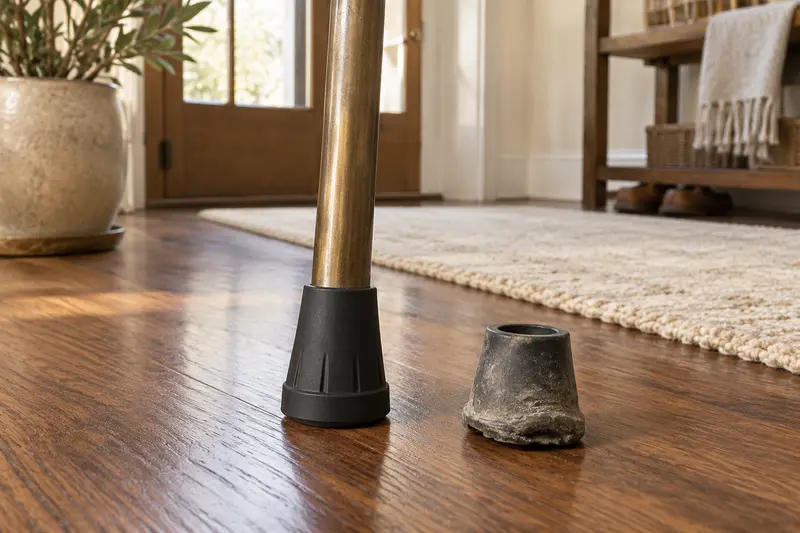
Cane tips should be replaced as soon as the tread looks worn or the rubber turns stiff, since the tip is what grips the floor. Before ordering, measure the shaft or leg diameter: cane tip sizes are commonly 5/8, 3/4 and 1 inch (about 16, 19 and 25 mm), and many quad cane legs take 1/2 inch (13 mm). To measure: check the old tip or the manual for a printed size; if there is none, measure the outside of the shaft about an inch (2.5 cm) above the bottom; then round to the nearest listed size, never down.
Free tool: Cane and walker height calculator ↗
Shortlisted for this decision
Affiliate-
Shortlisted
Vive Standing Cane Tip
For 3/4 inch canes standing on their own
Lets a standard 3/4 inch cane stand upright on its own on a flat floor.
Check price on AmazonCheck first: Check the shaft is 3/4 inch; the wider base adds weight and may feel awkward on stairs.
-
Shortlisted
Vive Quad Cane Tips, 1/2 in
For replacing worn quad cane feet
A set of four replaces worn feet on a standard quad cane in one go.
Check price on AmazonCheck first: Fits 1/2 inch quad cane legs only, not single-point canes.
Affiliate links: we may earn a commission from qualifying purchases at no extra cost to you. Prices are shown only on Amazon. Amazon.com (US listing). See the full comparison ↓
Documented options
Cane tip sizes: options compared
Options based on manufacturer documentation. Retailer links are affiliate links: we may earn a commission from qualifying purchases.
Affiliate retailer links
-
Vive Cane Tip - Self Standing Quad Base Replacement
Exact variant: Self-standing quad base, fits most walking canes
View product details on Amazon — United States -
Vive Cane Tip - Self Standing Quad Base Replacement
Exact variant: Self-standing quad base, fits most walking canes
View product details on Amazon — France
Affiliate retailer links
-
Vive Quad Cane Tips - Heavy Duty 1/2 inch Replacement Rubber Foot
Exact variant: 1/2 inch, black, set of four
View product details on Amazon — United States
IN THIS GUIDE
When do cane tips need replacing? Wear signs to check
The tip is the only part of the cane that touches the ground. Mayo Clinic compares it to tire tread and advises replacing the tip if the tread looks worn or the rubber has become stiff.
A smooth or cracked tip can skid on wet tile, polished wood or smooth pavement. Tips also wear faster outdoors, where rough pavement and gravel grind the tread down much sooner than carpet.
- Tread rings worn flat or a shiny, smooth base: replace.
- Rubber that feels hard or shows cracks when pressed with a thumbnail: replace.
- Metal showing through the bottom, or the tip worn thin on one side: replace now.
- New slipping on wet floors often starts at the tip, so check it first.
- If you rotate two canes, check and replace both tips together.
How to measure for a cane tip replacement: size chart
Tips are sold by the shaft diameter they fit, so the size printed on the old tip or in the cane's manual is the quickest answer. If neither is available, measure the outside of the shaft about an inch (2.5 cm) above the bottom.

Lay a ruler across the end, or wrap a strip of paper around the shaft, mark the overlap and divide that length by 3.14. Carex, for example, sells its tips in 5/8, 3/4 and 1 inch sizes, so round to the nearest of these and never size down.
A tip that is too loose can twist or slide off. One that is too tight will not seat fully, which leaves a hollow gap under the shaft.
- Pull the old tip off first if it comes away easily; measure bare metal or wood.
- Between sizes? Ask the cane maker which tip they list for that model.
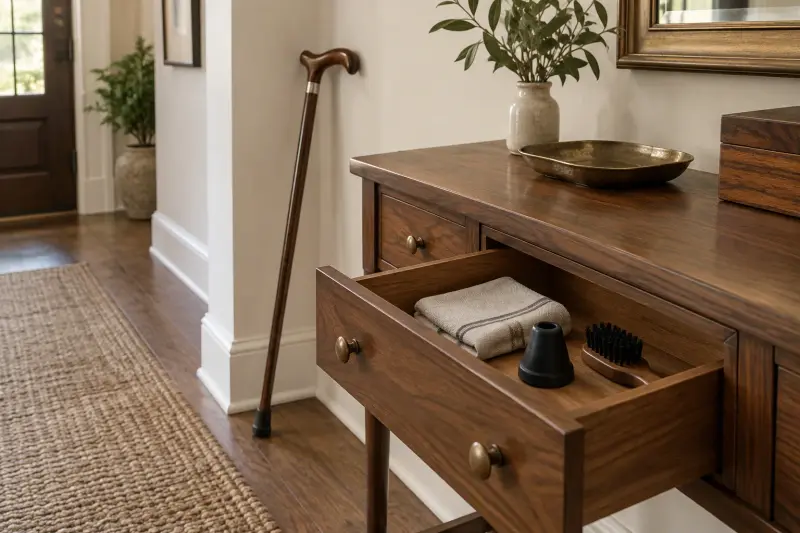
- Write the size on a label in the drawer where you keep the spare.
| Shaft or leg diameter | Typical cane | Tip types on this page |
|---|---|---|
| 1/2 in (13 mm) | Many quad cane legs | Quad cane tips, sold in sets of four (Vive Quad Cane Replacement Tips) |
| 5/8 in (16 mm) | Single-point canes with a thinner shaft; folding and wooden canes vary | Plain rubber tip (Carex lists this size) |
| 3/4 in (19 mm) | Many single-point canes, including standard and folding canes | Plain rubber tip (Carex); self-standing base (Vive Standing Cane Tip) |
| 1 in (25 mm) | Single-point canes with a wider shaft | Plain rubber tip (Carex lists this size) |
Which type of cane tip to choose
A plain rubber tip is the like-for-like replacement for a single-point cane. Heavy-duty versions add a steel washer inside so the shaft cannot push through the rubber.
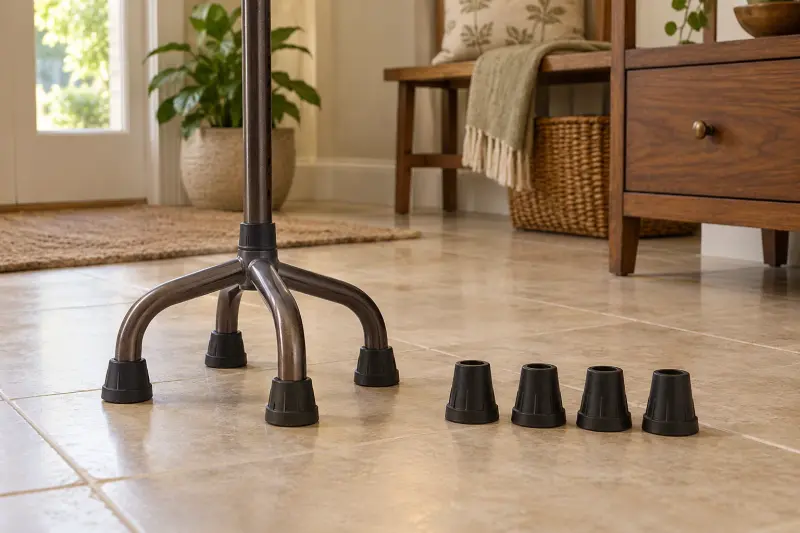
Larger bases flex or pivot so more rubber stays on the ground as the cane tilts, and self-standing bases add a small four-point foot so the cane stays upright when you let go. Quad cane tips are separate small feet, one per leg, sold in sets of four.
Long white canes used by people with sight loss take different tips, such as marshmallow or roller tips, chosen for a sweeping technique. Henshaws advises getting those from a vision rehabilitation specialist, and this guide does not cover them.
- Plain tip: lightest, easiest on stairs and curbs.
- Steel insert: worth it for heavier users or daily outdoor walking.
- Pivoting or large base: more contact on uneven ground, but heavier.
- Self-standing base: stays upright on flat floors, wider on stairs.
- Quad cane tips: replace all four together so the base sits level.
How the two Vive cane tips compare
Both are sold on Amazon.com, and Vive Health publishes specs for each on its own site. They fit different canes, so the size check matters more than any other detail: the standing tip is for single-point canes only, the quad tips for quad canes only.
Vive also sells plain replacement tips for single-point canes, but that item is not compared here.
| Tip | Fits | Base | Height | Weight | Material |
|---|---|---|---|---|---|
| Vive Standing Cane Tip | 3/4 in (19 mm) standard or folding canes | Four-point base, 4.5 in (11.4 cm) at its widest | 3 in (7.6 cm) | 10 oz (283 g) | Rubber with textured feet |
| Vive Quad Cane Replacement Tips | 1/2 in (13 mm) quad cane legs, set of four | 1 in (2.5 cm) base | 1.5 in (3.8 cm) long | Not stated | TPR with a metal insert |
Fitting a new tip and checking the cane height
Twist the old tip while pulling to work it off. Push the new one on firmly until the end of the shaft sits against the bottom inside; dipping a stiff tip in warm water for a minute makes it easier.
A new tip can change the cane's height, and a tall base like the 3 inch (7.6 cm) Vive standing tip changes it a lot. Mayo Clinic says the top of the cane should line up with the crease of your wrist with your arm hanging straight, so shorten the cane by a notch if needed.
Stand the cane on a flat floor and check it sits straight, then walk a few steps indoors before going out.
- Recheck cane height after fitting any new tip or base.
- A tilted quad base usually means one foot is worn or not fully seated.
- Listen for clicking or slipping; it can mean the tip is loose.
- Wipe tips clean after wet or muddy walks to keep the tread working.
- Recheck the fit after the first week of use.
When to ask for personal advice
A new tip restores grip, but it cannot fix a cane that is the wrong height or the wrong type. If walking feels less steady than it used to, raise it with a clinician or physical therapist, who can check the height, the tip and whether another aid would serve you better.
A tip change is also a good moment to look at the rest of the cane. Check the handle, the height button and any folding joints for wear or play.
- Ask if you are leaning harder on the cane than before.
- Ask if you have slipped, tripped or nearly fallen recently.
- Ask before switching to a standing or pivoting base after a stroke or injury.
- Bring the cane to the appointment so it can be checked.
MAKE THE SPEND MEANINGFUL
Cane tip sizes: low-cost alternatives
- Ask the clinic, pharmacy or medical supply store that supplied the cane whether they stock replacement tips.
- If the cane came from a loan closet, ask them for a replacement tip as well.
- Buy one spare plain tip with the replacement so you are never left with a worn one.
In brief
Cane tip sizes: questions answered
How often should a cane tip be replaced?
Replace a cane tip whenever the tread looks worn or the rubber feels stiff, rather than on a fixed schedule. Mayo Clinic gives that test because wear depends on how often and where the cane is used. Daily outdoor use on rough pavement wears a tip far faster than indoor use, so check it every few weeks.
Are cane tips one size fits all?
No, cane tips are made for a specific shaft or leg diameter. Common sizes are 5/8, 3/4 and 1 inch (about 16, 19 and 25 mm) for single-point canes, and many quad canes use 1/2 inch (13 mm) legs. Check the size on the old tip or in the cane's manual, or measure the outside of the shaft near the bottom before ordering.
How do you get an old rubber tip off a cane?
Grip the tip firmly and twist it back and forth while pulling it down off the shaft. A rubber jar opener or a dry cloth helps if your hands are slippery or weak. If an old tip has hardened onto the shaft, dipping it in warm water for a minute can loosen it.
Can I add a standing base to my regular cane?
Yes, if the shaft size matches the base. The Vive Standing Cane Tip fits 3/4 inch canes and lets the cane stay upright on flat floors, but it is 3 inches tall, so recheck the cane height after fitting it. Ask a physical therapist first if you were prescribed a specific cane after a stroke or injury.
How this guide was prepared
AI-assisted editorial research, checked against the linked primary sources.
Written with AI assistance from the sources listed below and checked against them. We have not tested these products in person.
How we use sources and AI assistance ↗Sources & fact checks
The guide separates sourced facts from editorial questions and examples. How we use sources and AI assistance.
- Mayo Clinic: Tips for choosing and using canes (worn or stiff tip, cane height) ↗
- Carex cane tips listed in 5/8, 3/4 and 1 inch sizes (retailer listing, part A720-00) ↗
- Henshaws: tips for long canes used by people with sight loss ↗
- Vive Health Standing Cane Tip: fit and dimensions ↗
- Vive Health Quad Cane Replacement Tips: fit and set contents ↗
Found an error or an outdated detail? Contact the editorial team.