
In brief
Compare the complete daily routine: entering, sitting or standing, washing, using controls and leaving. A walk-in bath and an accessible shower may support different preferences and access tasks. Choose from the assessed routine and surveyed bathroom, rather than a blanket category ranking.
IN THIS GUIDE
Write the routine before choosing the product
List what is comfortable now, what is difficult and what the reader wants to preserve. Include time spent bathing, assistance normally needed and how towels or toiletries are reached. Separate a preference for soaking from the practical need to wash in a seated position.
The NHS home-adaptation guidance includes bath lifts, walk-in showers and grab rails among examples considered through assessment. That UK pathway illustrates a range of possibilities; it does not establish that one product is universally suitable or that funding is available to every reader. Use an appropriate local assessment to discuss personal access questions.
Compare the whole room and installation
For each option, ask the supplier to describe the approach, usable entrance, seat or standing arrangement, water controls and exit. Add room drying, cleaning and maintenance tasks. A low entry description does not answer reach, balance, assistance or whether the rest of the bathroom remains usable.
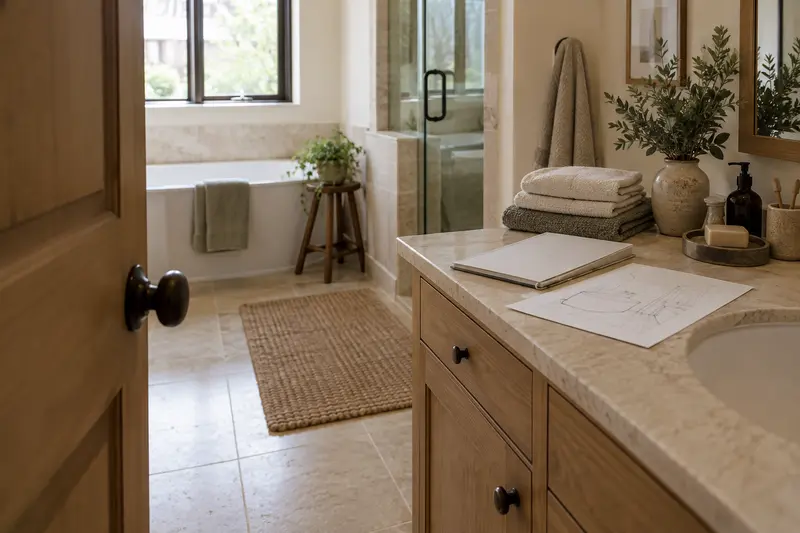
Record the building scope separately: removal, plumbing, any electrical requirements, floor or wall finishing and the time the bathroom is unavailable. Ask who verifies the proposed layout. A photograph of an attractive completed bathroom is useful inspiration, but it does not prove that the same arrangement works in your room.
Worked decision: soaking matters to one reader
Imagine a reader values a seated soak but finds the existing bath entry difficult. Another wants a quick wash and does not enjoy waiting in a bath. The same walk-in bath advertisement addresses them, but their priorities differ. Write those priorities on separate routine cards rather than ranking the product for an age group.
For the first reader, discuss the full fill, bathing, drain and exit sequence. For the second, compare an appropriately assessed shower arrangement and its seating options. If assistance is part of either routine, include its space and actions in the conversation. Neither reader needs extra comfort features simply because they are sold as premium.
Use a routine comparison canvas
Give each option a column and fill the rows below with a demonstration, survey answer or unresolved question. Keep personal suitability concerns visible for assessment. Do not convert the canvas into a numeric safety score: these are different tasks, not interchangeable feature totals.
A smaller change to the existing arrangement may also be worth discussing before full replacement. Reorganizing toiletries can improve a separate reach task, although it cannot resolve an unsuitable entry. The decision can be to gather more evidence, adjust scope or retain a workable routine, as well as purchase.
- Entry and exitRequired actions and assessment questions.
- WashingSeated or standing preference, controls and assistance.
- Waiting and careFill/drain routine, cleaning and maintenance.
- RoomSurveyed space, building work and shared household use.
Compare a soaking preference with a washing task
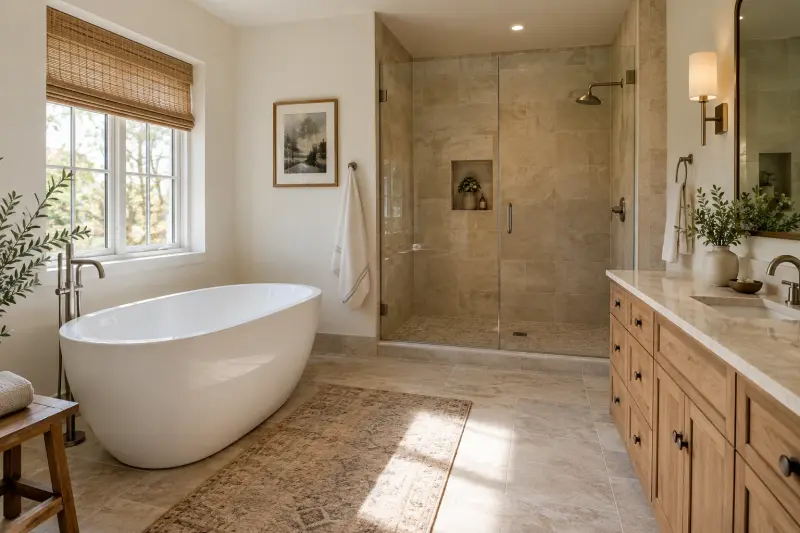
Start by describing what you enjoy about the present routine and what you want to change. A preference for a seated soak is different from a need to wash while seated. Write both if both matter. Also note whether a short wash, a longer bath, assistance or a particular control arrangement is important to you. The useful choice begins with your routine, rather than a general claim that everyone over a certain age should choose one category.
List the complete sequence in ordinary words: prepare the room, approach, enter, settle into the intended position, use the water controls, wash, finish and leave. Include towels, toiletries and any aid or helper already part of the routine. For a bath proposal, ask about filling and draining within that sequence. For a shower proposal, ask about its actual entry and seated or standing arrangement. A feature comparison becomes meaningful when each feature answers an action.
Give the actual user's comments their own space. A relative may prefer a premium-looking bathroom while the user values familiar controls or a shorter routine. These can be discussed together without allowing appearance to override the personal task. If movement, assistance or temperature tolerance raises a concern, direct it through appropriate assessment or advice. This article does not establish medical suitability from a questionnaire or promise that one layout prevents falls.
Use the NHS home-adaptation pathway as a scoped example for readers using that UK system. Its assessment examples include bath lifts, walk-in showers and rails. The range is a reason to discuss the underlying task rather than assume full replacement is the only option. It does not establish funding, availability or an identical pathway in another country. Contact the relevant local service with your actual routine and home information.
Finish the routine card with three priorities and three unanswered questions. A priority might be preserving a soak or understanding seated washing. An unanswered question might concern exit, a helper's space or a control position. Do not convert these into a universal score. The card is ready for a provider and appropriate assessor to discuss, and it gives the household a clear reason to postpone a purchase if an essential action remains uncertain.
Put both proposals through the same whole-room review
Draw the ordinary bathroom with the entrance door, fixed fixtures, furniture and storage before adding either proposal. For each option, show the approach, usable entrance and onward exit route using the provider's actual drawing. Keep door movement and nearby storage visible. The room review should ask how the bathroom functions when complete, not simply whether a replacement occupies the old bath space or resembles a desirable photograph.
For a walk-in bath, ask the provider to identify the supplied door orientation, internal seat, controls, handshower and drain arrangement. Keep those details tied to the exact model. For a shower, ask about its proposed entry, washing position, controls and any specified seating. Do not assume every shower is a standing routine or every bath entry is appropriate for the reader. The category names are starting points, not personal-fit conclusions.
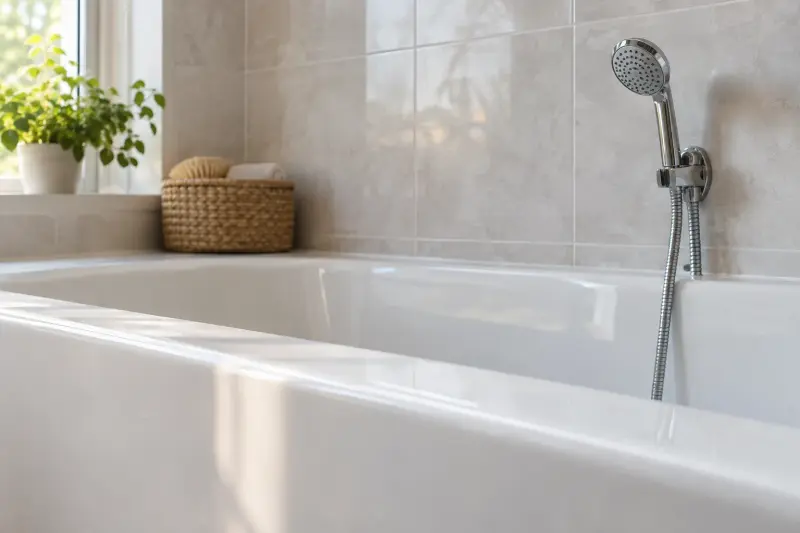
Include assistance in both layouts if it is part of the intended routine. Ask where the helper would be and what actions are being proposed, with appropriate personal assessment where needed. A large-looking enclosure does not establish adequate helper space or a suitable movement. The provider should explain the physical proposal, while the relevant advice addresses the person's task. Record each answer with its evidence rather than merging all reassurance into one suitability tick.
Review storage and cleaning as ordinary room activities. Where are the needed towels and toiletries kept? Who cleans the different surfaces and any installed systems? Ask for the applicable care information before assuming that a simpler appearance means less upkeep. You can often improve a separate reach task by reorganizing existing items. That adjustment should remain distinct from an unresolved entry or exit question that storage alone cannot solve.
Compare the building work separately from the routine. Ask about removal, disposal, plumbing, any electrical provision, floor and wall finishing, service access and the bathroom's unavailable period. Record included, excluded and unanswered work with its responsible provider. An attractive category estimate does not establish the completed project. The same-room review connects the daily routine to the work actually proposed, with optional decorative choices clearly identified.
Understand the full fill, wash, drain and exit sequence
Ask a bath provider to explain filling, bathing, draining and leaving as one complete normal routine. Kohler's US FAQ states that fill and drain timing varies with the home's plumbing conditions. Keep that manufacturer-specific qualification attached to any demonstration. A short edited segment or a fast-drain label does not establish the duration of the reader's own sequence. Request the model, options and relevant conditions beside any timing claim.
Discuss what the user expects during the waiting stages. They may want to use a handshower, reach a towel later or understand the supplied comfort functions. Ask which actions are possible in the actual configuration and how they are explained at handover. A heated-backrest description is a feature claim, not evidence that everyone will find the wait comfortable. Keep personal tolerance questions for appropriate advice without turning a comfort option into a medical benefit.
For the shower proposal, describe the corresponding washing and exit routine. It may have its own seated arrangement, controls and household assistance tasks. Do not reduce it to no waiting if preparation, entering or drying raises another practical question. Compare the whole activity the reader wants to perform. The shorter-looking product sequence is not automatically the easier personal routine, and the longer-looking one may preserve a preference the user values.
If the household has one bathroom, ask how temporary access is managed during either project. A planned installation date and confirmed reopening arrangement are different pieces of information. Request the responsible provider's scope and timing conditions. Keep the user's practical needs visible in the conversation rather than booking work solely from a general one-day headline. This is project coordination, not a prediction of how long the reader's installation will take.

Record indirect evidence honestly. A video can explain a sequence, while a site review can address parts of the plumbing or layout and an appropriate assessment can address personal tasks. None should be relabelled as our hands-on test. If an important part of the full routine remains unresolved, seek the relevant answer before accepting the category. A useful comparison can lead to another discussion instead of an immediate product order.
Worked comparison: one reader values a soak, another a short wash
Imagine two fictional readers reviewing the same bath advertisement. Reader A enjoys a seated soak and wants to understand alternatives to the present entry routine. Reader B prefers a shorter wash and does not value soaking. They share a broad interest in improving the bathroom, but their priorities differ. The worked comparison therefore begins with two routine cards rather than selecting a single product as best for an age group.
Reader A asks a provider to explain the exact door, seat, control and fill-and-drain sequence, with personal movement questions directed to appropriate assessment. A premium finish is listed as optional. The reader also discusses whether another assessed adaptation could preserve a workable existing routine. This does not assume any alternative is suitable; it keeps the underlying soaking preference visible while the practical entry and exit questions are answered.
Reader B asks about an appropriately assessed shower arrangement, including whether seated washing is part of the proposed task. The provider is asked to show controls, entrance and storage on the actual room plan. A bath-and-shower combination is not assumed to be a compromise that automatically serves every need. If such an option is offered, it needs its own complete routine and scope, rather than receiving credit merely for containing two category names.
Both readers compare the completed work and ownership responsibilities. They ask about cleaning, service access, supplied documents and the unavailable bathroom period. Reader A's preference for optional comfort features does not make them essential to Reader B. Reader B's preference for a shorter routine does not make Reader A's soaking choice irrational. Each reader can weigh their own preference after the personal and project questions receive the relevant evidence.
The outcome could be different products, a smaller assessed change or a decision to wait. The example supplies no fictional prices, test results or guaranteed benefit. Its value is a fair method: preserve the user's task, compare the full room and routine, obtain the appropriate answers and keep optional preferences separate. A successful editorial recommendation helps people understand a choice rather than push both readers into whichever package carries the highest ticket.
Use a routine and ownership comparison canvas
Give each considered arrangement a column and use the same rows: preparation, approach, entry, washing position, controls, finishing, exit, cleaning and household support. Add source or evidence beside each answer. Record whether it comes from a model document, feature demonstration, site response or appropriate assessment. Leave important missing answers visible. The canvas is a conversation aid, not a numeric safety rating or an online suitability verdict.

Make a separate work-scope sheet for the room. Include exact model or supplied arrangement, removal and disposal, plumbing, electrical work where relevant, finishes, completion and support. Ask which party is responsible and whether the amount is confirmed, an allowance or unanswered. Keep optional appearance choices apart. This makes a lower quotation understandable without assuming it covers the same finished room as a more extensive package.
Add the care commitment to the ownership discussion. Ask for model-specific cleaning instructions, relevant system care and the support route. Kohler's care page distinguishes its bath surfaces and hardware. That is a manufacturer's example of why one generic cleaning product description is incomplete, not a universal cleaning recipe. The household should know who performs the care routine and which supplied instructions apply before choosing additional systems or finishes.
Create a small companion-task list only after the main routine is understood. Towels stored nearer an appropriate location, a suitable organizer or a confirmed bathing aid may answer a narrower task. Start by checking existing items and layout. Do not imply an inexpensive accessory resolves an unassessed entry or replaces a professional grab-rail decision. An ethical companion link should explain the precise job and preserve the no-purchase option.
Close the canvas with next actions, not a forced winner. Perhaps one provider needs to issue an internal drawing, another needs to clarify a care commitment, or a personal-task question needs an assessment. When those answers arrive, date the revised record. The comparison adds value when it helps the user decide whether to proceed, simplify optional scope, retain a workable arrangement or seek another appropriately reviewed option.
- RoutinePreparation through exit, including water sequence and assistance.
- EvidenceIdentify document, demonstration, site review, or assessment.
- ProjectCompleted room scope, responsible trades, and amount status.
- OwnershipApplicable cleaning instructions, support route, and household responsibility.
- Next actionMissing answer, revised scope, or another appropriate discussion.
Questions readers ask about a walk-in bath or shower
Is a walk-in bath better than a shower for older adults?
There is no universal category answer. Describe the person's complete routine and preferences, then obtain appropriate assessment and a surveyed proposal. Seated washing, soaking, controls, assistance and entry can be different questions. A product's age-related marketing does not establish that its arrangement suits a particular reader.
Can an accessible shower have a seated routine?
Ask the provider and appropriate assessor about the actual proposed arrangement and task. Do not assume shower means standing, or that adding a seat establishes personal suitability. The entry, washing position, controls, helper space and exit still need review. Keep the complete room and routine in the comparison rather than deciding from a photograph of one feature.
Will a walk-in bath make bathing faster?
Request evidence for the exact fill, wash, drain and exit sequence under the stated conditions. Kohler's FAQ qualifies timing by the home's plumbing. A fast-drain label is not a complete household duration. If routine length is important, compare the appropriately reviewed alternative and the full task, without inventing a timing advantage from an edited clip.
Should I choose a bath-and-shower combination?
Treat it as its own proposed routine and project. Ask which bathing actions and options are actually supplied, how controls and entry work and what care is required. Two category names do not automatically resolve conflicting preferences. The provider's configuration and appropriate personal-task advice should explain whether the arrangement answers the user's priorities.
What inexpensive improvements are worth considering first?
Organize existing room information and discuss the underlying task. Repositioning suitable storage may help a separate reach issue, while another assessed adaptation could deserve consideration. Do not buy aids or accessories to conceal an unresolved entry. Keep the no-purchase route visible: gather the appropriate evidence before choosing a larger installation or a companion product.
How do I make the final comparison?
Use the same routine rows, completed-work scope and ownership questions for every option. Keep the actual user's comments, relevant assessment and site answers visible. Leave missing information unanswered rather than scoring it as adequate. The decision can be a purchase, a simpler revised proposal or a pause; the useful result is understanding why the chosen arrangement answers the task.
MAKE THE SPEND MEANINGFUL
Before adding to the basket.
- Organize existing toiletries within an appropriate reach arrangement.
- Discuss an assessed adaptation to the existing bath or shower before full replacement.
How this guide was prepared
AI-assisted editorial research, checked against the linked primary sources. Product testing and a credentialed individual review are not claimed.
source-checked editorial; no hands-on testing or expert suitability assessment claimed
How we use sources and AI assistance ↗Sources & fact checks
The guide separates sourced facts from editorial questions and examples. We have not claimed hands-on product testing. How we use sources and AI assistance.
- NHS: home adaptation assessment ↗
- Kohler: water, door, fill and drain questions ↗
- Kohler: cleaning and care guidance ↗
Found an error or an outdated detail? Contact the editorial team.