
In brief
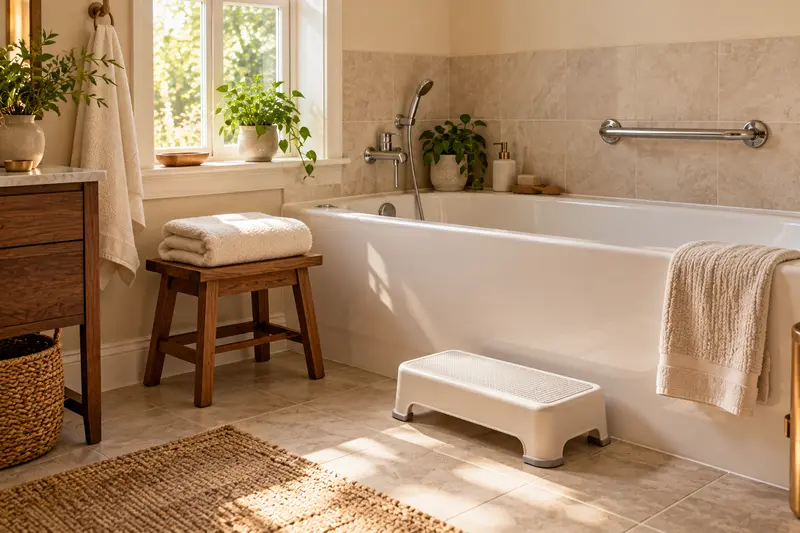
A bath step is a low, non-slip platform that sits outside the tub and shortens the climb over the edge. It suits someone who steps in and out steadily but finds the lift tiring. Measure the tub edge first, choose a step that stays put on a dry floor, and pair it with a grab rail. If balance is shaky, a bath board is often safer.
Shortlisted for this decision
Affiliate-
Shortlisted
Vive Bath Step
For a low step beside the tub
Low 4 in plastic step with a textured non-slip rubber top, rubber feet and a 400 lb capacity, per Vive.
Check price on AmazonCheck first: Vive advises against stacking and use inside the tub; the listing says 4.5 in, Vive says 4 in.
-
Shortlisted
Drive 13030-1SV Step Stool
For a taller, sturdy steel step
Steel step stool with a 9 in step, a non-skid ribbed rubber platform and a 300 lb capacity, per Drive Medical.
Check price on AmazonCheck first: No handrail; use it beside a fixed grab rail and check the 9 in height suits your tub.
-
Shortlisted
Drive Bariatric Stool with Handrail
For a step with a handle to hold
Heavy-duty steel step stool with a handle at 34 in, a 9 in step and a 500 lb capacity, per Drive Medical.
Check price on AmazonCheck first: Needs more floor space; confirm item number 13062-1SV on the listing.
Affiliate links: we may earn a commission from qualifying purchases at no extra cost to you. Prices are shown only on Amazon. Amazon.com (US listing). See the full comparison ↓
Documented options
Bath step guide: options compared
Options based on manufacturer documentation. Retailer links are affiliate links: we may earn a commission from qualifying purchases.
Affiliate retailer links
-
Vive Bath Shower Step Stool
Exact variant: 4.5 in
View product details on Amazon — United States
Affiliate retailer links
-
Drive Medical 13030-1SV Step Stool
Exact variant: Silver Vein
View product details on Amazon — United States
Affiliate retailer links
-
Drive Medical Bariatric Heavy-Duty Step Stool with Handrail
Exact variant: Silver Vein
View product details on Amazon — United States
IN THIS GUIDE
Who a bath step helps
Say your mother still likes a proper bath, but lifting her leg over the tub edge has started to feel like a climb. A bath step gives her a halfway point, so each movement is smaller.
It helps most when someone walks well and only struggles with the height of the edge. It helps far less when the real problem is balance, dizziness or getting down to sit in the water.
An NHS occupational therapy leaflet names stepping in and out of the bath as one of the main problems with bathing safely. That is the exact moment a step is meant to make easier.
- People with stiff hips or knees who can still stand on one leg briefly
- Shorter adults facing a high tub edge
- Anyone who already holds a fixed grab rail when stepping in
- Family members looking for a small change before larger equipment
What to check before buying a bath step
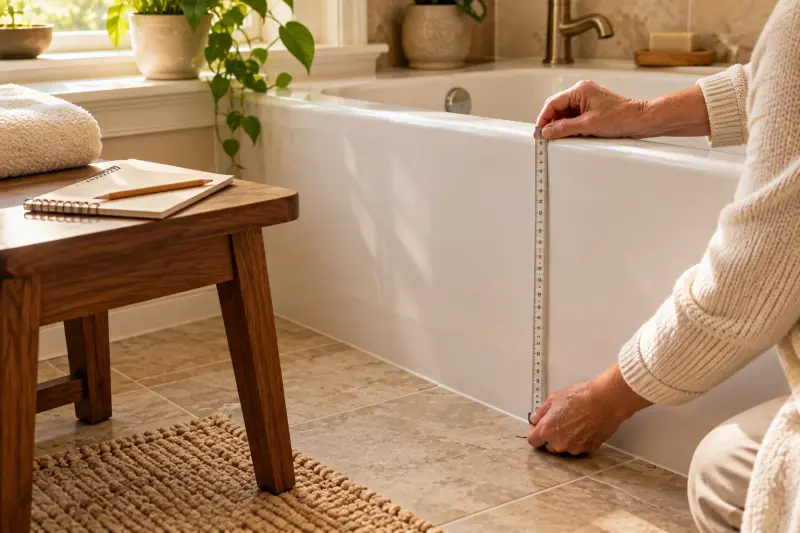
Start with a tape measure. Note the height of the tub edge from the bathroom floor, the depth from the edge down to the tub floor, and the free floor space beside the bath.
Here is the real limit, said once: a step shortens the climb up, but the tub floor stays where it is. The drop on the inside becomes longer, so the second foot has further to travel down.
Low bath steps are often about 4 in (10 cm) high, like the Vive step in this guide. The two Drive step stools stand 9 in high, so they suit a high tub edge or a bed better than a low one.
- Tub edge height from the floor, and the depth inside the tub
- Free floor space for the step plus a clear spot to turn
- Step height, platform size and the stated weight capacity
- A non-skid top and rubber feet or tips
- Where a hand can hold on at every stage
How the three picks compare
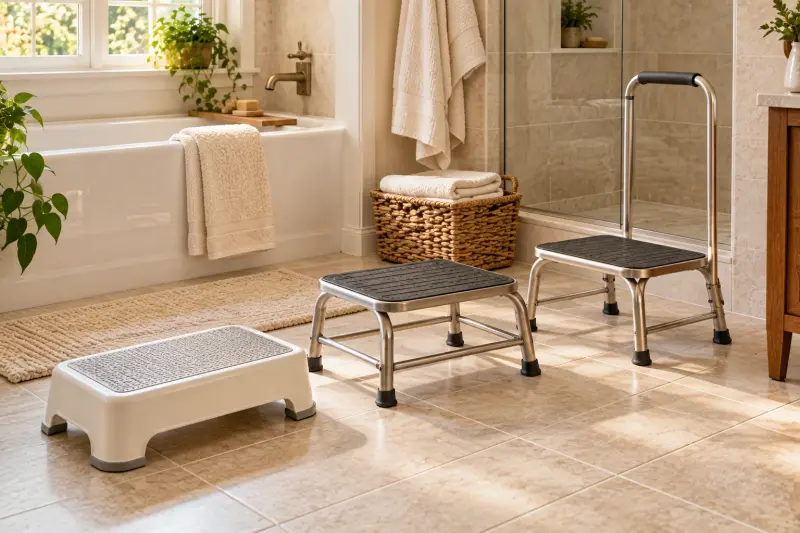
The Vive Bath Step is a low plastic platform made to sit outside the tub. The two Drive Medical picks are taller steel stools with a non-skid ribbed rubber platform and a 9 in step; one adds a handrail.
The facts below come from each maker's product page and the verified Amazon titles. Vive advises against using its step inside the tub, and Drive does not describe either stool for a wet tub, so keep all three on a dry floor beside it.
- Vive Bath Step: 4 in high, 18 x 14 in top, 400 lb capacity, textured rubber top and rubber feet
- Drive Medical 13030-1SV: 9 in step, 14 x 11 in platform, 300 lb capacity, 5 lb, no handrail
- Drive Medical 13062-1SV: 9 in step, 14 x 10 in platform, 500 lb capacity, handle at 34 in
- Both Drive stools: steel frame with silver vein finish and a non-skid ribbed rubber platform
- Warranty: limited lifetime for both Drive stools; Vive lists a lifetime guarantee
Using a step stool for elderly users safely
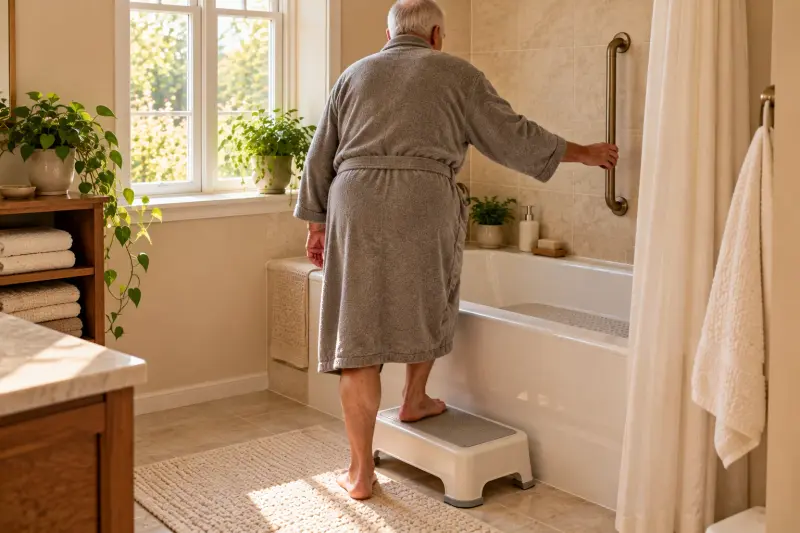
The CDC's home fall checklist says that if you must use a step stool, get one with a bar to hold on to, and never use a chair instead. In a bathroom, that bar works best alongside a fixed grab rail.
The same checklist suggests a non-slip rubber mat or self-stick strips on the tub floor, and grab bars next to and inside the tub. A step outside the bath does nothing for a slippery surface inside it.
Keep the floor around the step dry. Put a towel within reach before getting in, so nobody has to stand on the step dripping while looking for one.
- Place the step so the whole foot lands flat on the platform
- Hold a fixed rail, not a towel bar, shelf or shower curtain
- Wipe water off the step and floor before stepping out
- Move the step out of the walking route after bathing
When a bath board or seat is the safer choice
Stepping is not the only way in. The NHS leaflet says that rather than stepping in and out, it may be easier and safer to use a bath board, which lets you sit on the edge and swing the legs over.
A bath board is especially useful with an overhead shower, because you do not have to climb down into the bath. The leaflet also suggests a grab rail fitted at the side of the bath.
Say your father finds standing on one leg wobbly even on a good day. A step asks him to do exactly that, twice, beside a wet tub. A board lets him sit first and move one leg at a time.
- Choose a board if standing on one leg feels unsteady
- Consider a bath seat if sitting down in the water is the hard part
- Think about a walk-in shower if the tub edge is the daily struggle
- Ask for a rail fitted to the wall before anything else
When to ask an occupational therapist
If there has been a fall, a near miss or a new health problem, ask for an occupational therapy assessment before buying anything. A therapist can watch the real movement in the real bathroom.
Ask the doctor or local health service: "Can someone check how my father gets in and out of the bath, and what equipment fits our tub?" Bring your measurements to that visit.
Two more questions are worth writing down: "Would a bath board or a step suit our tub better?" and "Where should a grab rail go for his height?" A short written list keeps the visit focused.
- A fall or near miss in the bathroom
- Dizziness when standing or turning
- Recent hip, knee or back surgery
- Needing another person to help with every bath
BEFORE YOU DECIDE
Bath step guide: buying checklist
These checks organize the decision.
MAKE THE SPEND MEANINGFUL
Bath step guide: low-cost alternatives
- Ask your local health or social services about an occupational therapy assessment, which can lead to loaned or fitted equipment.
- Add non-slip strips to the tub floor before buying anything larger.
- Use a lightweight handheld shower and wash seated, if a full bath is not essential.
In brief
Bath step guide: questions answered
Are bath steps safe for elderly people?
A bath step can make the climb over a tub edge smaller for someone who walks steadily. It does not help with balance, and it makes the drop inside the tub longer. Use it on a dry floor next to a fixed grab rail, with a non-slip mat inside the tub. If balance is unsteady, ask an occupational therapist whether a bath board would suit better.
How high should a bath step be?
Measure the tub edge from the floor and the depth inside before choosing. Low bath steps such as the Vive step in this guide are about 4 in (10 cm) high, while the Drive step stools are 9 in high. A step that is too tall for a low tub can leave an awkward, longer drop on the inside, so match the step to your tub.
Is a step stool with a handrail better?
A handrail gives a hand something to hold during the step up, and the CDC's fall checklist advises a step stool with a bar to hold on to. A handrail needs more floor space, though. In a bathroom, a fixed grab rail on the wall usually stays useful for the move into the tub, while a stool handle stays outside it.
Should I choose a bath step or a bath board?
A step suits someone who can stand briefly on one leg and only struggles with the height. A bath board lets you sit on the edge and swing your legs over, which an NHS occupational therapy leaflet says may be easier and safer than stepping in and out. If you are unsure, ask for an assessment before buying either one.
How this guide was prepared
AI-assisted editorial research, checked against the linked primary sources.
Written with AI assistance from the sources listed below and checked against them. We have not tested these products in person.
How we use sources and AI assistance ↗Sources & fact checks
The guide separates sourced facts from editorial questions and examples. How we use sources and AI assistance.
- UHCW NHS Trust occupational therapy leaflet: bathing and showering advice ↗
- Vive Bath Step: specifications and FAQ ↗
- Drive Medical 13030-1SV step stool: specifications ↗
- Drive Medical 13062-1SV bariatric foot stool with handrail: specifications ↗
- CDC STEADI: Check for Safety, a home fall prevention checklist ↗
Found an error or an outdated detail? Contact the editorial team.